
Thin content: what it is and how to fix it in SEO
By Tiago CostaUpdated on July 2, 2026
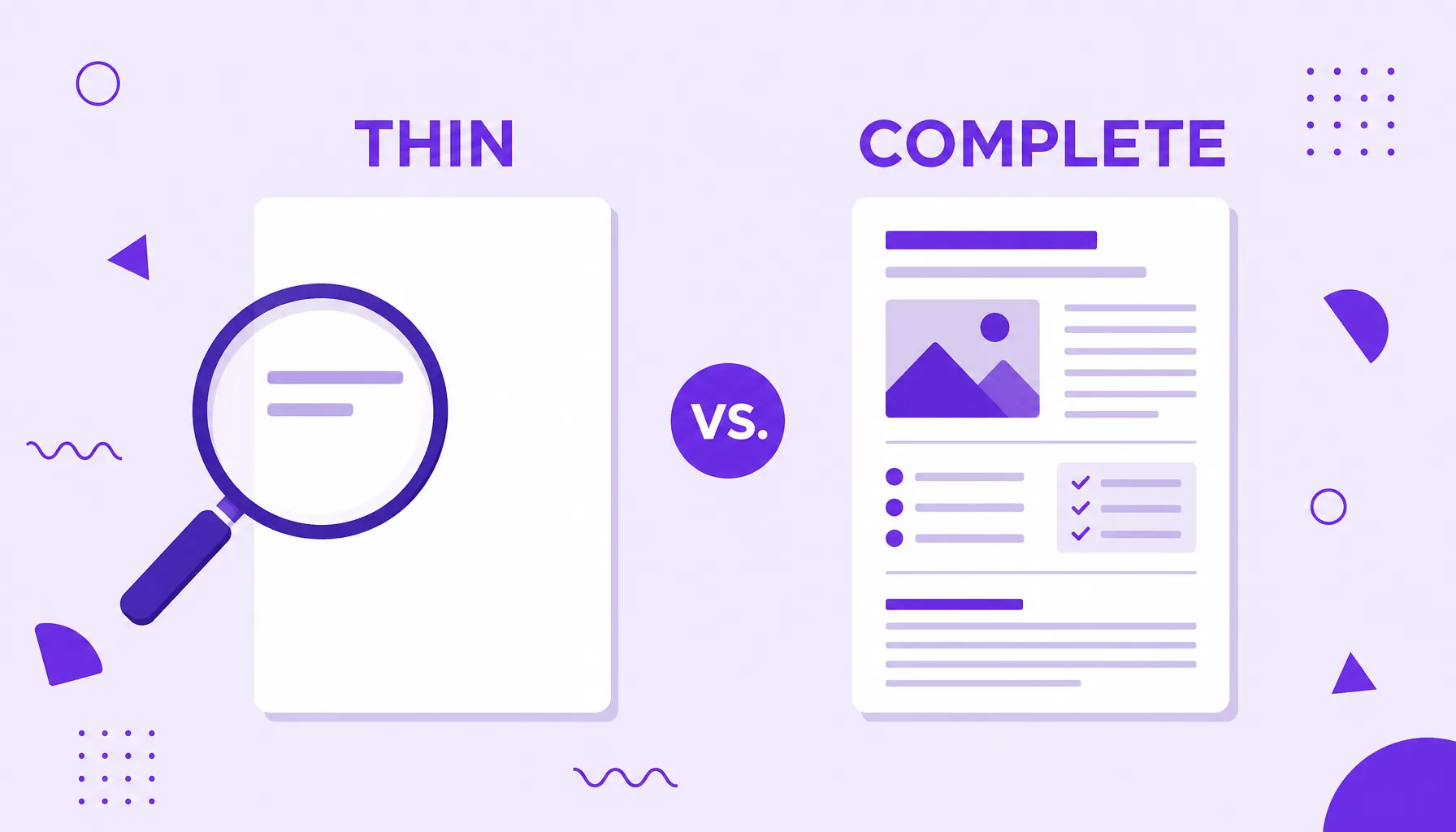
Thin content is a page with little or no value to the user. It usually counts as thin content when it is:
- short, generic text that does not answer the question;
- copied content or mass-produced content with no review;
- nearly identical pages created only to rank;
- affiliate or doorway pages with no information of their own.
What thin content is
Thin content is the term for shallow content, the kind that occupies a URL without delivering value to whoever lands on it. The name describes the idea well: a thin page, with no depth, that touches the subject lightly and leaves the reader with the same question they had before.
It is important to separate thin content from short text. An objective answer of a few lines can be excellent if it fully resolves the search intent. The problem is not the number of words, but the absence of value: when the page adds nothing, shows no experience or authority and exists only to fill space, it is shallow by definition.
In short, thin content is any content that does not justify its own existence in the eyes of the user and, consequently, in the eyes of the search engine.
What are the most common types of thin content
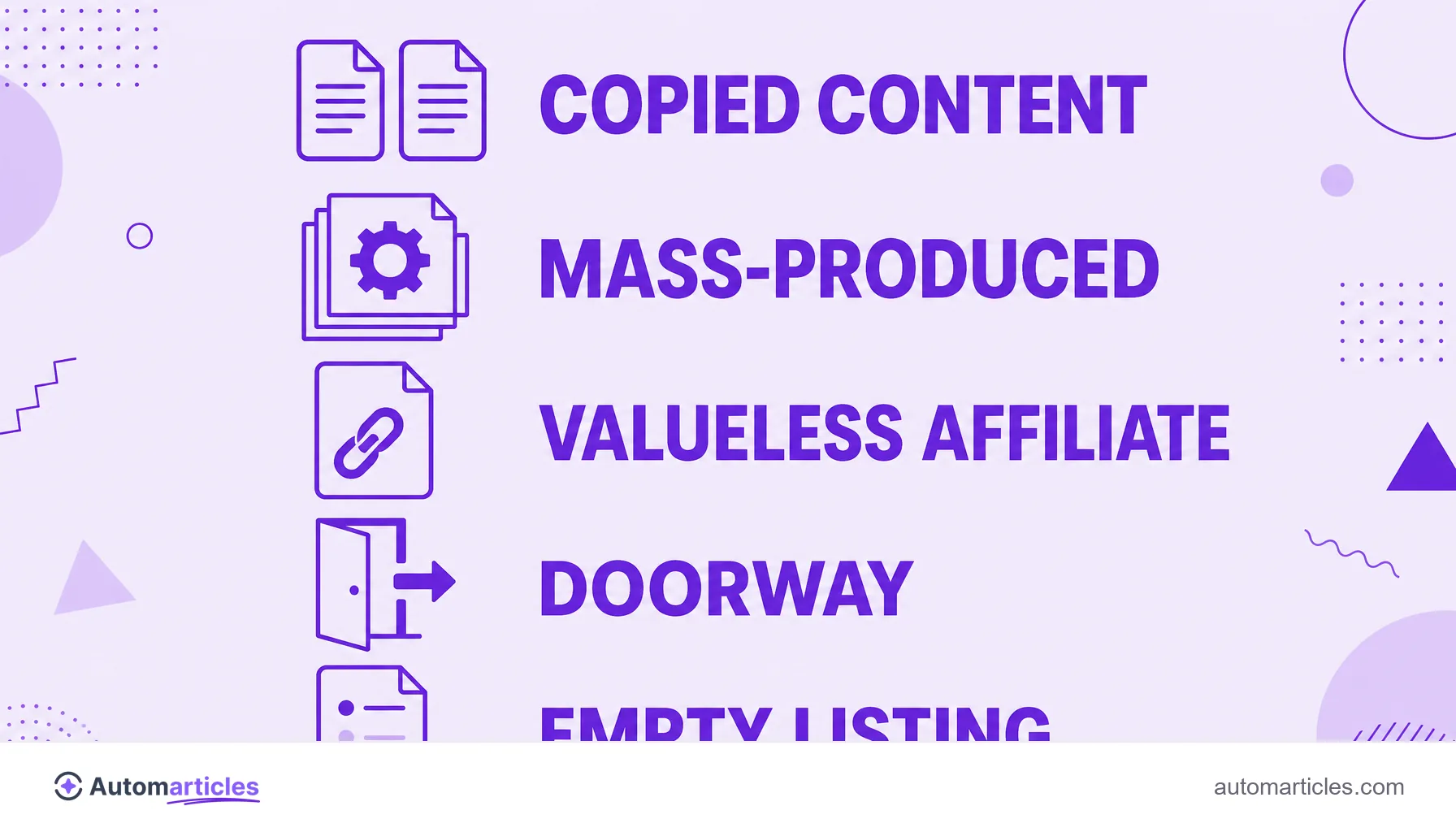
Shallow content shows up in several forms, some obvious and some less so. The most frequent types are:
- Copied or duplicate content: texts reproduced from other sites or repeated internally, with nothing original.
- Mass-produced content: pages generated automatically, today often by AI, published with no curation or human review.
- Valueless affiliate pages: shallow reviews made only to insert links, with no testing or real opinion.
- Doorway pages: nearly identical pages created to capture search variations and push the user somewhere else.
- Empty profiles and listings: tag, author or category pages that gather very little useful content.
The common thread is always the same: these pages exist for the search engine, not for the person. And that is exactly what Google has learned to identify and demote.
Why thin content hurts SEO
A shallow page rarely ranks, and the damage goes beyond it. Google assesses the quality of the site as a whole, so a large volume of weak content can drag down even the good pages, especially after a core update.
The numbers show the size of the challenge. According to the traffic study by Ahrefs, around 96.55% of pages receive no organic traffic from Google, and shallow content, with no depth and no links, is one of the causes pointed to for so many invisible pages.
Beyond bringing no organic traffic, thin content wastes the search engine's crawl budget, dilutes the domain's authority and worsens the experience of whoever clicks and does not find what they were looking for. It is a silent cost that piles up.
How to identify thin content on your site
Before fixing, you have to find it. Diagnosing shallow content combines data and critical reading. A practical routine:
- Cross-reference pages with zero traffic: in Google Search Console, list the URLs that have received no clicks or impressions for months.
- Look for nearly identical pages: spot repeated templates that change just one word, typical of content generated at scale.
- Read with a user's eyes: ask whether the page answers the question better than the competitors that rank.
- Check the bounce rate: pages with a high bounce rate and low time on page may be disappointing whoever arrives.
- Add the topic context: an isolated page, with no internal links and outside any cluster, is often a candidate to become thin content.
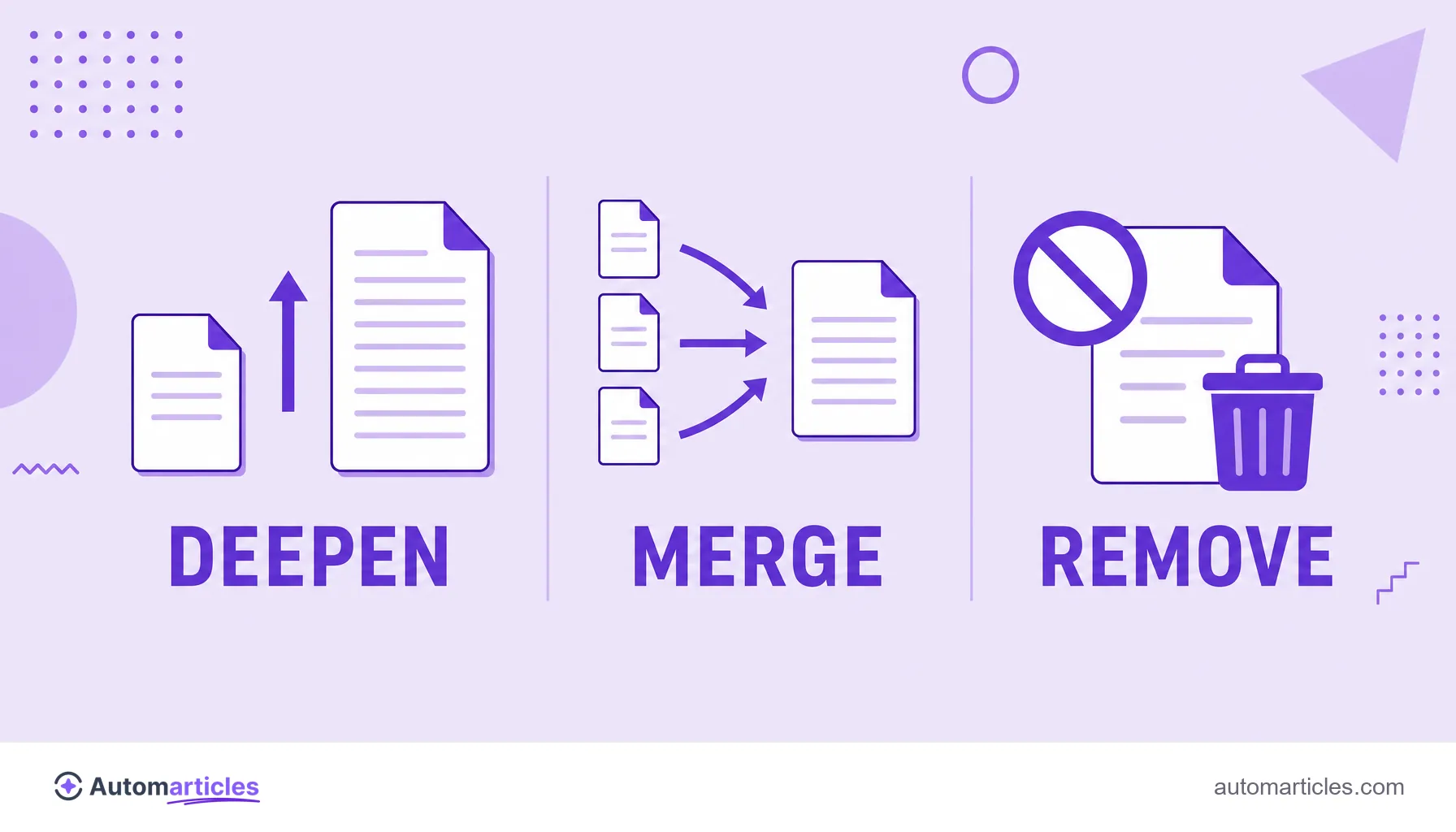
The goal is to build a list of suspect URLs and, for each one, decide what to do: deepen, merge or remove.
How to fix thin content step by step
Not every shallow page deserves the same treatment. The decision revolves around three paths: improve, consolidate or eliminate. A step by step:
- Deepen what has potential: rewrite the page with examples, data, step by step and complete answers, turning it into material that can become cornerstone content.
- Merge similar pages: combine several weak texts on the same theme into a single strong guide and use a 301 redirect from the old ones to the new.
- Remove what cannot be saved: pages with no value and no traffic can get a noindex or be deleted for good.
- Reinforce the context: connect the pages you keep into topic clusters to build topical authority.
The ruler for deciding is always the same question: does this page, as it is, help the user more than any result that already exists? If the answer is no, either you improve it or it goes.
How to avoid thin content when producing content
Fixing is more expensive than preventing. A few habits keep shallow content from piling up again:
- Start with a good brief: a clear content brief makes sure every text is born with a defined goal, topics and depth.
- Write for intent, not for volume: cover the question completely instead of chasing a word count.
- Review what AI produces: use automation to move faster, but ensure curation, data and human voice before publishing.
- Mind the form: good scannability, with headings and lists, helps the reader see the page's value.
- Publish less and better: one complete page is worth more than ten shallow ones competing with each other.
In the end, avoiding thin content is a matter of purpose: every page needs to exist to truly answer someone, not just to try to rank.