
Generative search: what it is and how AI builds answers from several sources
By Tiago CostaUpdated on July 2, 2026

Generative search is when AI generates an original answer from several sources, instead of listing pages. In practice, it:
- interprets the question in natural language;
- gathers and synthesizes information from several sites;
- writes a new answer, often with the sources cited;
- replaces the list of links with a ready made text.
What generative search is
Generative search is the search model in which artificial intelligence does not just find pages, it generates an original answer to your question. It reads several sources, understands what you want and writes, on the spot, a text that brings everything together in natural language.
The difference from classic search is big. In the traditional model, the search engine returns a list of links and it is up to you to open, read and combine the information. In generative search, that reading and synthesis work is done by the machine, which delivers the conclusion ready made.
It is not about retrieving a text that already existed on some site. The answer is composed on the spot, combining passages and ideas from different sources into a new piece of writing, which is exactly the generative trait of this kind of search.
How generative search works
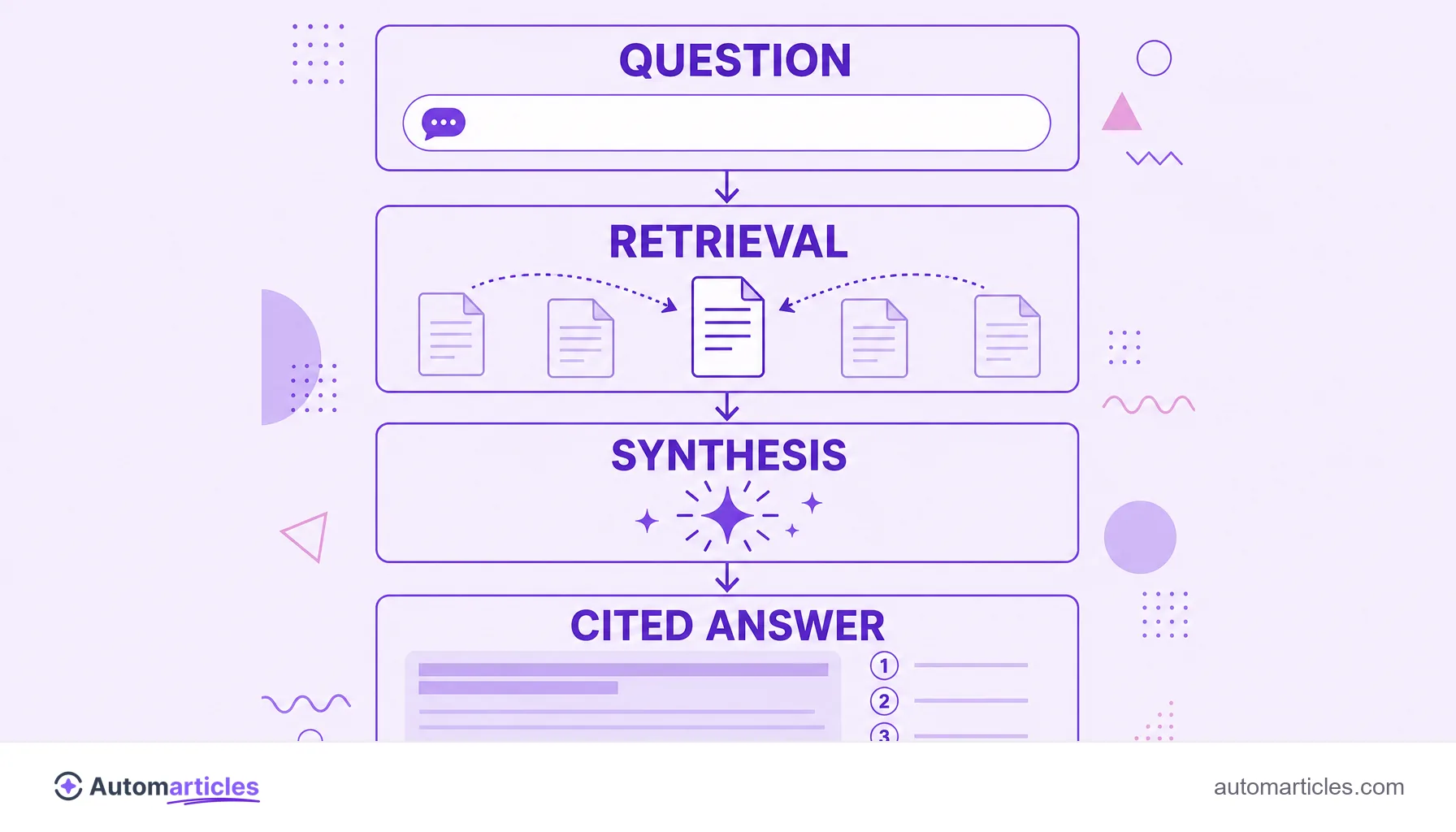
Under the hood, generative search combines two parts: information retrieval and text generation. It helps to understand the sequence:
- It interprets the intent: the system understands the question in natural language, even when it is long or conversational.
- It retrieves sources: just like a search engine, it scans the web (or an index) for the most relevant pages.
- It synthesizes the answer: the language model reads those sources and writes a new text that answers the question directly.
- It cites the origins: most tools show links to the sources used, to provide transparency and allow checking.
This architecture, joining search and generation, is what is usually called retrieval augmented generation. In practice, it is what lets the AI answer with current data, not just with what it memorized during training.
Traditional search vs generative search
The main difference between traditional keyword search and generative search lies in what each one returns and in how you ask:
| Aspect | Traditional search | Generative search |
|---|---|---|
| Query | A few keywords | Long, conversational questions |
| Result | List of links | Answer written on the spot |
| Sources | One per link | Several combined into a text |
| User effort | Open and read the pages | Read the ready answer |
This even changes keyword research. Instead of aiming only at short, exact terms, the content needs to answer full questions well, the way people talk to the AI.
Where generative search already shows up
Generative search is no longer a lab demo and is already in products used every day. The main places:
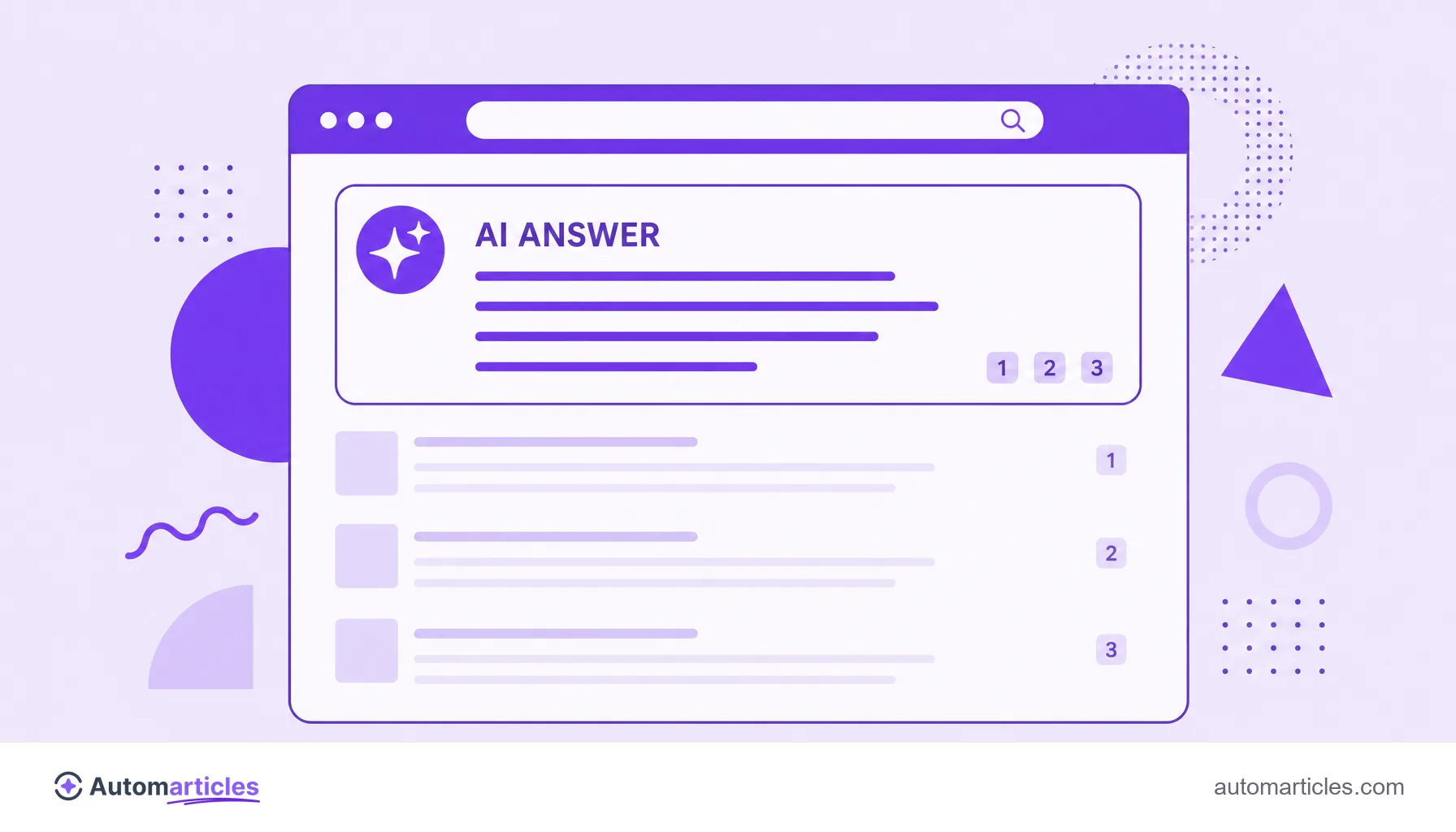
- AI Overviews: the AI Overviews are the generative version inside Google itself, with an AI summary at the top of the page.
- AI Mode: AI Mode is Google's fully conversational search experience, in which the generated answer is the main interface.
- SGE: the Search Generative Experience was the name of Google's early experiment that gave rise to these features.
- Assistants with web: ChatGPT, Perplexity, Gemini and Claude do generative search when they answer by querying the internet in real time.
The advance is fast but uneven. The AI Overviews study by Semrush showed that the presence of these generative summaries fluctuated a lot throughout 2025, reaching around 25% of the analyzed searches at the peak, before pulling back to close to 16% by the end of the year. In other words, the format is still being calibrated, but it already reaches a relevant share of searches.
Is Google Search a generative AI?
Neither fully, nor too little. Google is not, at its core, a generative AI: it is still a search engine that crawls and indexes the web. What it did was attach layers of generative AI on top, such as AI Overviews, to generate answers from what it already indexes.
That hybridization is likely to grow. The consultancy Gartner projects that traditional search engine volume will drop 25% by 2026, as assistants and generative answers absorb part of the queries. Search does not disappear, but it migrates in format.
For the user, the effect is zero-click search: more and more answers are resolved right on the screen, with no visit to a site. For those who publish, this reinforces the need to be the source the AI chooses to cite inside those answers.
How to appear in generative search: GEO in practice
Appearing in generative search is the goal of generative engine optimization, or GEO. The logic changes: instead of fighting only for first place, you want to be one of the sources the model reads and cites. In practice:
- Answer questions directly: content that already gives the clear answer is easier for the AI to extract and reuse, the same principle that applies to any answer engine.
- Structure for machine reading: clear headings, lists, tables and FAQs make synthesis easier.
- Bring data and sources: numbers with a clear origin raise the chance of becoming an AI citation.
- Reinforce authority: E-E-A-T (experience, expertise, authoritativeness and trust) matters, because the AI prefers trustworthy sources.
The takeaway is direct: SEO does not end with generative search, it extends. Continuing to be useful and trustworthy is what makes your content get chosen, both by readers and by the machines that now answer for them.