
What cornerstone content is and how to create it
By Tiago CostaUpdated on July 2, 2026

Cornerstone content is a site's foundational content, the base the other articles rest on. In practice, it:
- covers a core topic broadly and in depth;
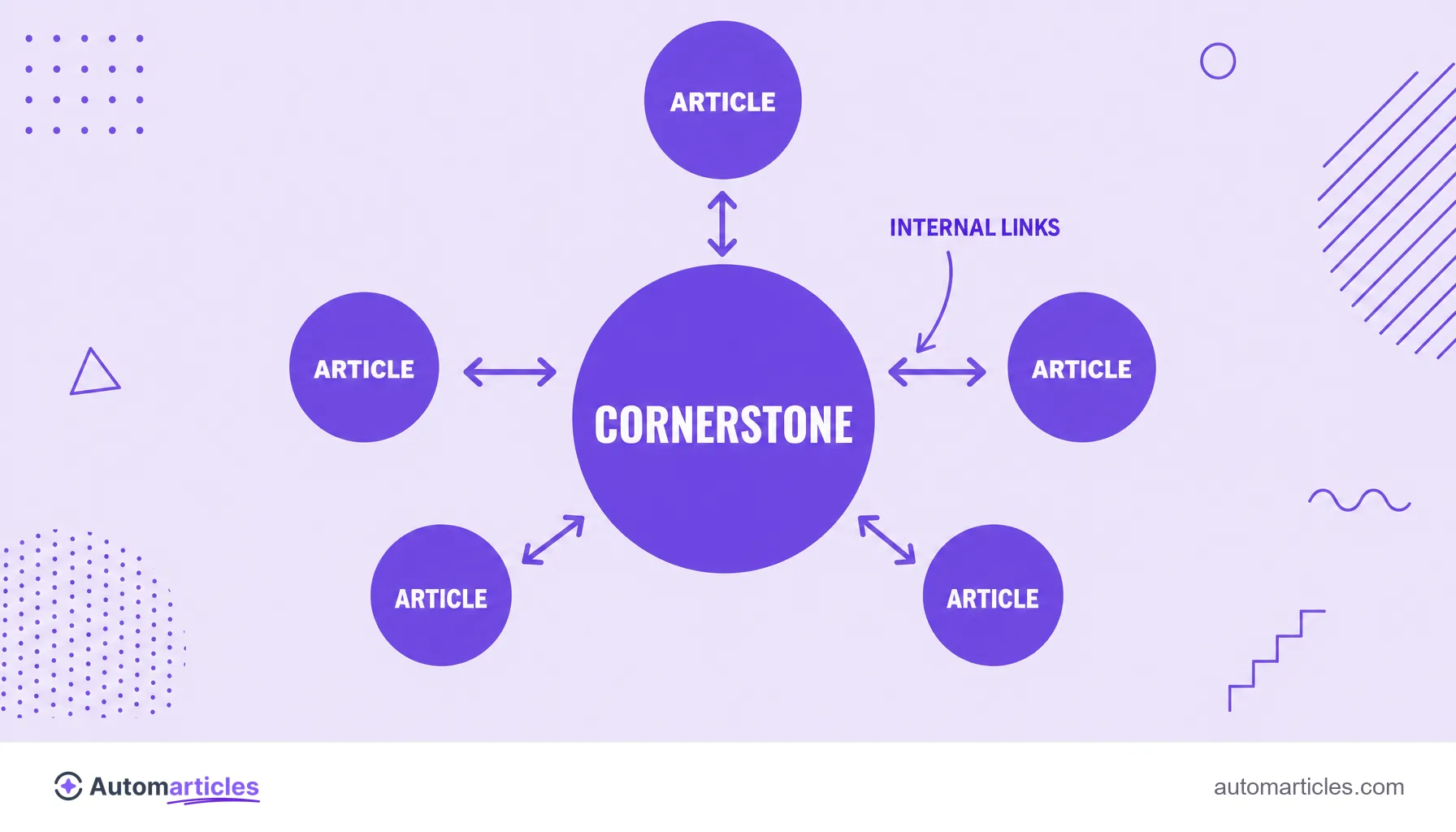
- concentrates the internal links from related pages;
- signals your main authority to Google;
- tends to be the content you most want to rank.
What cornerstone content is
Cornerstone content, or foundation content, is the name given to the most important and complete pages on a website, the ones that hold up the whole content strategy. The term comes from architecture: the cornerstone is the keystone, the first stone that sets the alignment of the entire construction.
In practice, it is a broad article that explains a core topic of your niche from end to end. Instead of dealing with a specific detail, it gives the overview and works as an entry point, while the smaller articles go deep into each subtopic and point back to it.
A good cornerstone brings together three traits: it is in depth, it is timeless and it receives many internal links. It is the content you would recommend first to someone who wants to understand the subject and, not by chance, the one you most want to see at the top of Google.
Why cornerstone content matters for SEO
Concentrating effort on a few foundation pages is not editorial vanity, it is a ranking strategy. The cornerstone works as a hub that receives authority from the articles around it and gives it back, which helps the site rank for more competitive terms.
Much of that strength comes from internal linking. In the HubSpot topic clusters experiment, the team found that the more they interlinked related pages, the better the placement in the results and the higher the number of impressions. In other words, the link architecture around foundation content moves the needle.
Depth matters too. The analysis of 912 million posts by Backlinko showed that long content receives, on average, 77.2% more backlinks than short pieces. Since the cornerstone is precisely the most complete material on the site, it tends to attract external links more easily and to distribute that authority through internal links to the rest of the blog.
Cornerstone content, pillar page and content cluster
These three terms live together and sometimes get confused. It is worth separating what each one means:
| Concept | What it is |
|---|---|
| Cornerstone content | The fundamental and most complete page on a core topic, the base of the site's authority. |
| Pillar page | The page structure that organizes a broad topic and links to the supporting content. |
| Content cluster | The set formed by the central page plus the satellite articles that surround it. |
In practice, a cornerstone is usually published as a pillar page and sits at the center of a cluster. It is this model that builds topical authority, the reputation of covering a subject in depth, and that makes Google see the site as a reference on the topic.
How to create cornerstone content
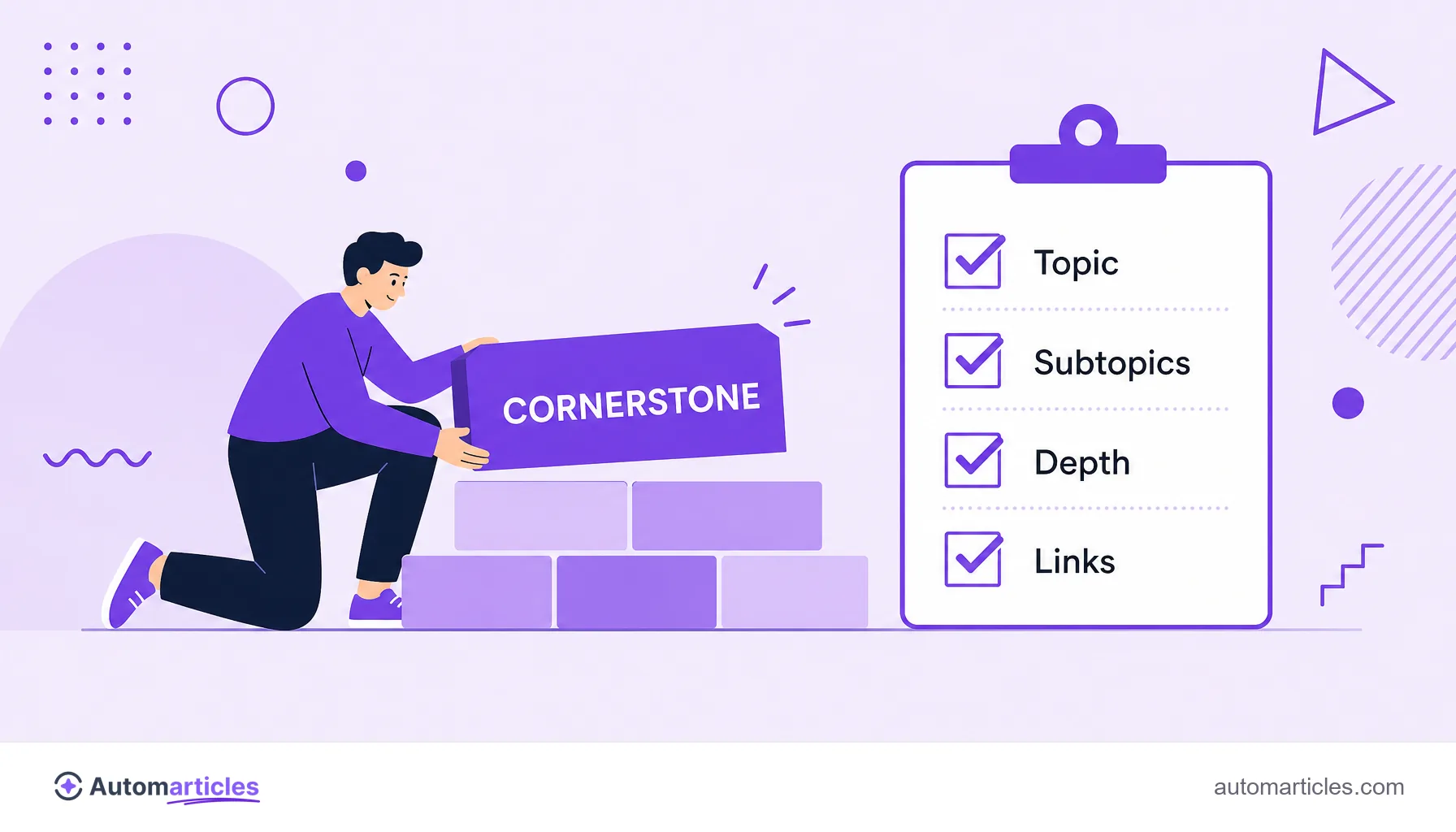
Creating good foundation content is more about planning than inspiration. A step by step that works:
- Choose a core topic: pick a broad, strategic subject in your niche, with good search volume and tied to what you sell.
- Map the subtopics: list the questions and related terms that will become satellite articles, supported by a topic map.
- Write comprehensively: cover the topic from end to end, with definitions, examples and step by step, to be the most complete reference.
- Structure for scanning: use clear headings, lists and an introduction that answers the main question right away.
- Do the internal linking: point the satellite articles to the cornerstone and, from it, link back to the supports, forming the cluster.
- Always update: keep the content alive, since the cornerstone needs to be evergreen, that is, relevant for a long time.
Once that is done, the cornerstone becomes the flagship of your content marketing: the piece you promote, update and use as the base for everything else.
Cornerstone content in Yoast (WordPress)
If you use WordPress, you have probably seen the expression inside the Yoast SEO plugin. There, marking a piece as cornerstone content is a way to signal to the plugin itself (and to you) which are the most important pages on the site.
When you turn on that marking, Yoast does two useful things: it applies a slightly stricter readability and SEO analysis to those pieces and starts suggesting that regular articles link to them. In the internal linking accordion, cornerstones show up highlighted, which makes it easier to build that cluster structure in practice.
It is worth remembering that marking something as a cornerstone in Yoast does not change anything in Google's eyes directly. It is an internal organization to guide your internal links and editorial priority strategy, not a magic ranking tag.
Common mistakes with cornerstone content
A few slips undo the effect of foundation content even when the text is good. Watch out for these:
- Having too many cornerstones: if everything is fundamental, nothing is. A few truly central pages concentrate authority better.
- Forgetting the linking: a cornerstone with no internal links pointing to it is just a long article, without the hub power.
- Thin content disguised as long: padding does not work. Real depth is what attracts links and keeps the reader.
- Never updating: an outdated foundation loses position to competitors who revise the topic.
With these points fixed, the cornerstone plays the role it was built for: being the page that holds up your topic and pulls the rest of the site up.