
What evergreen content is and how to produce it
By Tiago CostaUpdated on July 2, 2026
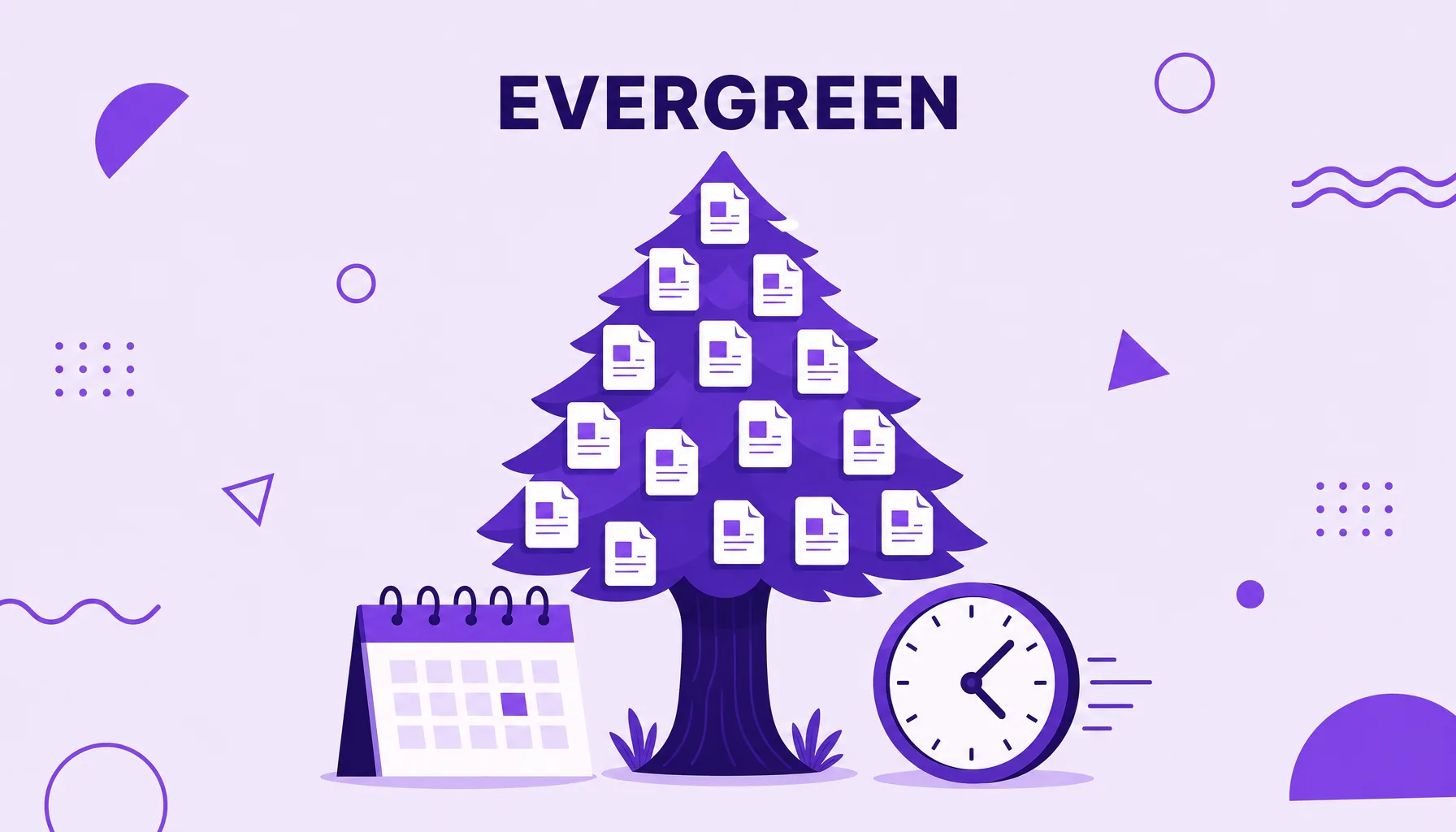
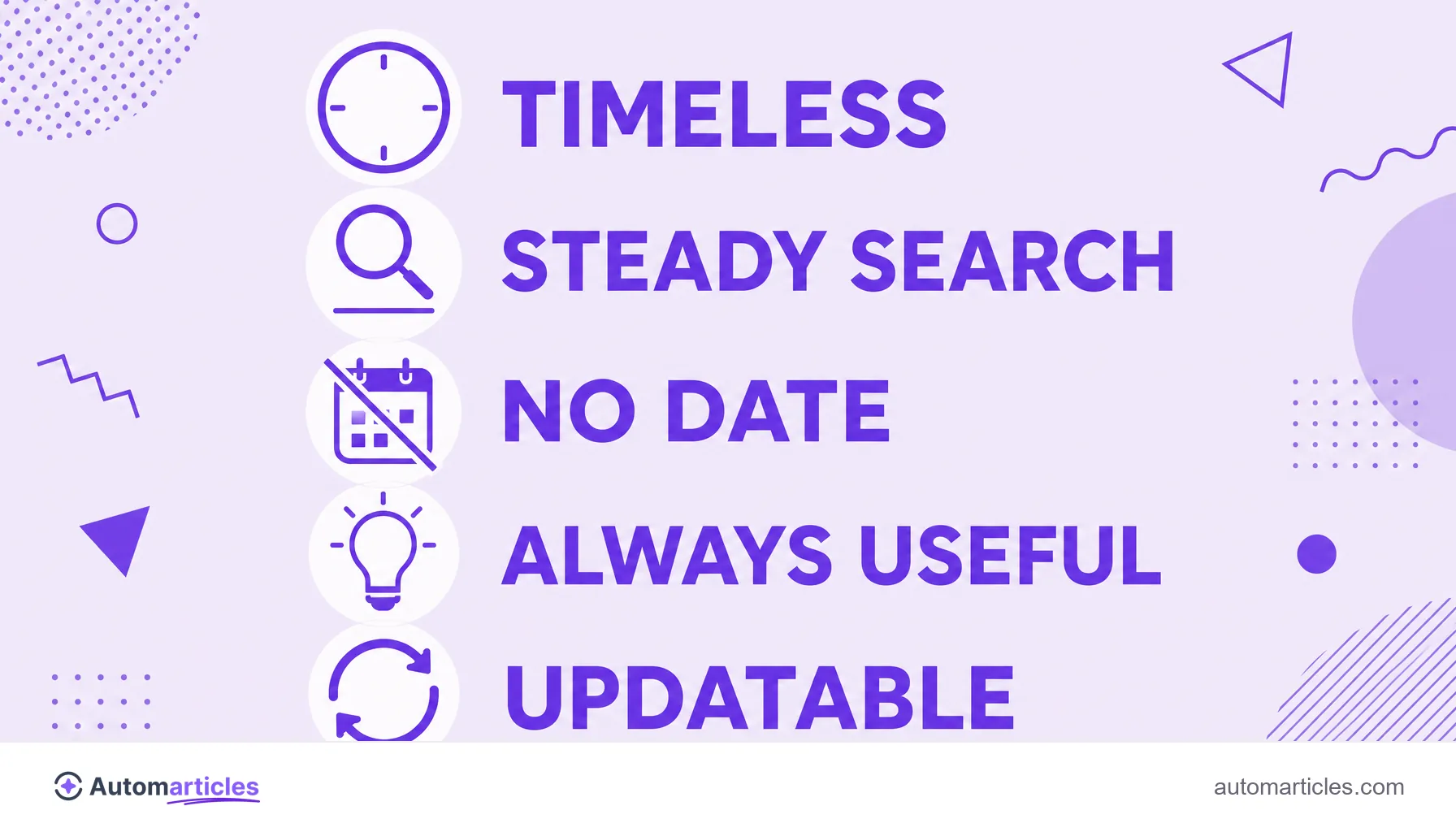
Evergreen content is material that stays relevant and drives traffic for years, without aging over time. In practice, it:
- answers lasting questions, not passing events;
- does not depend on dates, fads or current news;
- keeps being searched months or years after it is published;
- needs only occasional updates to stay current.
What evergreen content is
Evergreen content is content that has no expiration date. It covers topics that interest the audience in a constant way, which is why it keeps being searched and keeps generating visits long after the publication date.
The term comes from the English word evergreen, the name for perennial trees that keep their leaves green all year instead of shedding them in one season. The metaphor is direct: like those trees, evergreen content stays alive and green, while perishable content (a news story, coverage of an event, a promotion) wilts a few days later.
An example makes the difference concrete. An article like "what is organic traffic" is evergreen: the question does not change from one year to the next. "Black Friday 2024 results", on the other hand, loses relevance as soon as the date passes. Evergreen content is, therefore, one of the most valuable assets in any content marketing strategy.
Why evergreen content matters for SEO
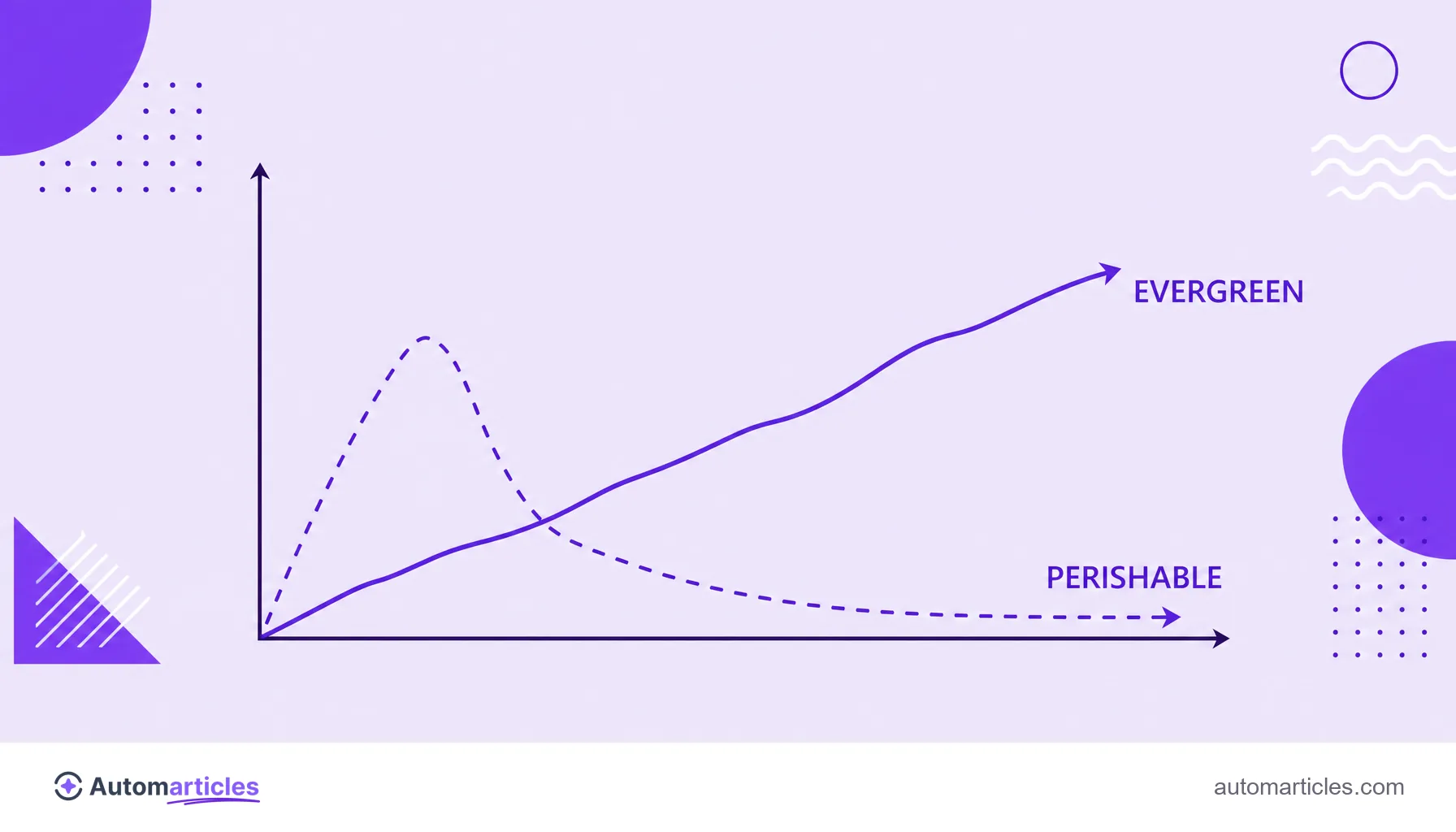
The logic of SEO rewards those who build lasting assets. A news story can bring a spike of traffic in one day and disappear the next; a good evergreen guide attracts a steady stream of visitors every month, with no new investment in promotion.
This cumulative effect is measurable. A study by HubSpot, with data from more than 15,000 companies, showed that only 1 in 10 posts is a compounding post (one that grows over time), but that group accounts for around 38% of all blog traffic. In other words, a small share of evergreen content sustains most of the visits.
There are other advantages on top of steady traffic: evergreen content tends to accumulate backlinks over time, reinforces the site's topical authority on a subject, and lowers the cost per visit, since it keeps performing without recurring media spend.
Examples and formats of evergreen content
Not every format is born evergreen, but some are naturally built to last. The most common are:
- "What is" and "how to" guides and tutorials: they explain concepts and processes that change little.
- Glossaries and definitions: pages that describe the terms of a field, always searched by people who are learning.
- Lists of fundamentals: best practices, common mistakes and principles that stay valid for years.
- Frequently asked questions: objective answers to recurring questions from the audience.
- Timeless concept studies and comparisons: materials that explain "A vs B" without relying on specific versions.
The table below sums up the difference in behavior between the two types of content:
| Evergreen content | Perishable content |
|---|---|
| Timeless, lasting topic. | Tied to a date, trend or news story. |
| Steady and growing traffic. | Quick spike followed by a drop. |
| Performs for months or years. | Loses value in days or weeks. |
How to choose evergreen topics
The choice of topic is what separates an article that lasts from one that ages fast. The central criterion is stability of demand: look for subjects that people search consistently, month after month, and not in seasonal spikes.
A few practical paths help you mine these topics:
- Prioritize informational intent: questions like "what is", "how does it work" and "how to" usually have lasting demand.
- Explore the long tail: a good long-tail keyword reveals specific, lasting questions with less competition.
- Avoid time triggers: skip years in the title, product versions and references to events, which date the content.
- Check the trend curve: research tools show whether interest is stable or was just a passing fad.
Gathering these topics in an editorial calendar helps you balance production between evergreen pieces, which sustain traffic in the long run, and opportunistic content, which rides the spikes of the moment.
How to produce evergreen content step by step
Producing content that lasts takes extra care in the writing. A reliable routine:
- Write for the beginner: assume little prior knowledge and explain every term, since there will always be people discovering the subject.
- Go genuinely deep: cover the topic completely, with examples and step by step, to become the definitive reference on it.
- Avoid dated language: swap expressions like "recently" or "this year" for timeless wording.
- Structure it to last: use clear headings, lists and good scannability, which make future updates easier.
- Connect to other content: turn your best evergreen pieces into cornerstone content, the pillars that organize the site and distribute authority.
The goal is not to write fast, but to write something so complete that it keeps answering the reader's question three years from now.
How to keep evergreen content updated
Evergreen does not mean eternal without maintenance. Even the best guides suffer from what is called content decay: over time, data ages, competitors publish something better and rankings drop. The good news is that recovering an evergreen usually costs less than creating a new article from scratch.
The updating routine (the content refresh) is simple and powerful:
- Review the data: swap old statistics, screenshots and examples for current versions.
- Expand what stayed shallow: add sections, frequently asked questions and examples that competitors already cover.
- Adjust the intent: check whether what the audience searches for on that keyword is still the same and adapt the angle if needed.
- Republish with a new date: signaling the update helps the search engine recognize that the material is fresh again.
A mature blog dedicates a good share of the effort not to new articles, but to keeping alive the evergreens that already bring most of the traffic.