
Acquisition channels: what they are and the main ones
By Tiago CostaUpdated on July 2, 2026
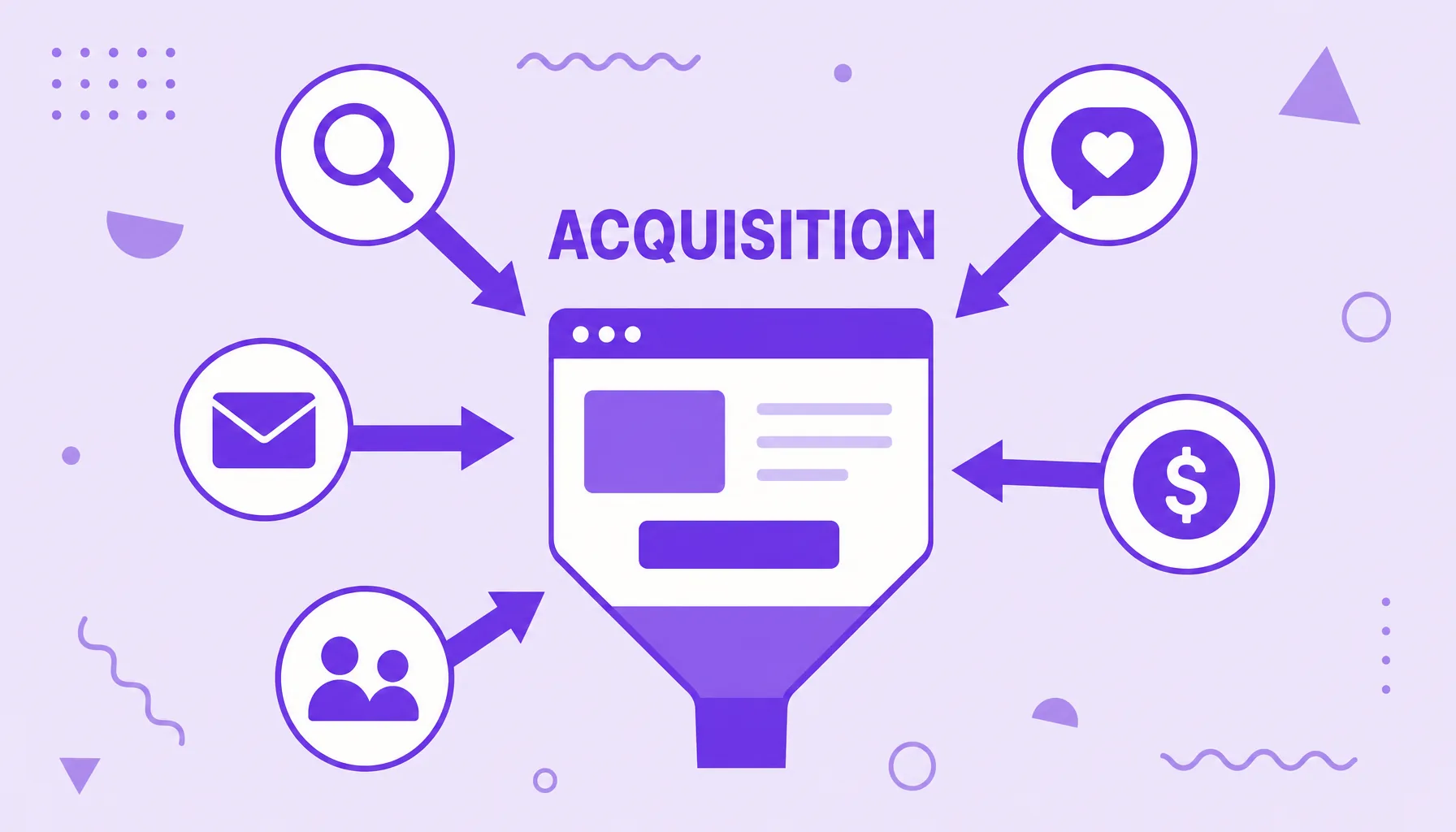
The main customer acquisition channels are:
- Organic search (SEO and content);
- Paid media (search and social ads);
- Social networks (organic and community);
- Email marketing (owned list);
- Referral and word of mouth;
- Direct traffic (brand).
What acquisition channels are
Acquisition channels are the paths through which a person discovers your company and reaches your site, product or store. Instead of a single entry point, there is a set of sources, and each visit, lead or sale can be attributed to the channel that originated it.
Think of them as the doors into the business. Someone can arrive through a Google search, an ad, a social post, an email or a friend's recommendation. Mapping these doors is the first step to understanding where your best customers come from.
An important part of this traffic usually comes from organic traffic, that is, visits earned in the unpaid search results, which tend to be cheaper and more sustainable in the long run.
What are the main acquisition channels
Although each market has its particularities, a few channels show up in almost every strategy. The main ones are:
| Channel | How it works | Trait |
|---|---|---|
| Organic search | SEO and content that rank on Google | Low cost per visit, gradual result |
| Paid media | Search, social and display ads | Fast, but stops when spending stops |
| Social networks | Organic content and community | Reach and brand relationship |
| Communication with your own list | High return, depends on a list | |
| Referral | Word of mouth and referral programs | High trust, hard to scale |
| Direct | Those who type the URL or know the brand | Reflects brand strength |
The weight of search tends to surprise. According to the channel study by BrightEdge, organic search accounts for around 53% of all website traffic, against roughly 15% from paid search. In other words, appearing well in the unpaid results is, for most businesses, the largest acquisition channel available.
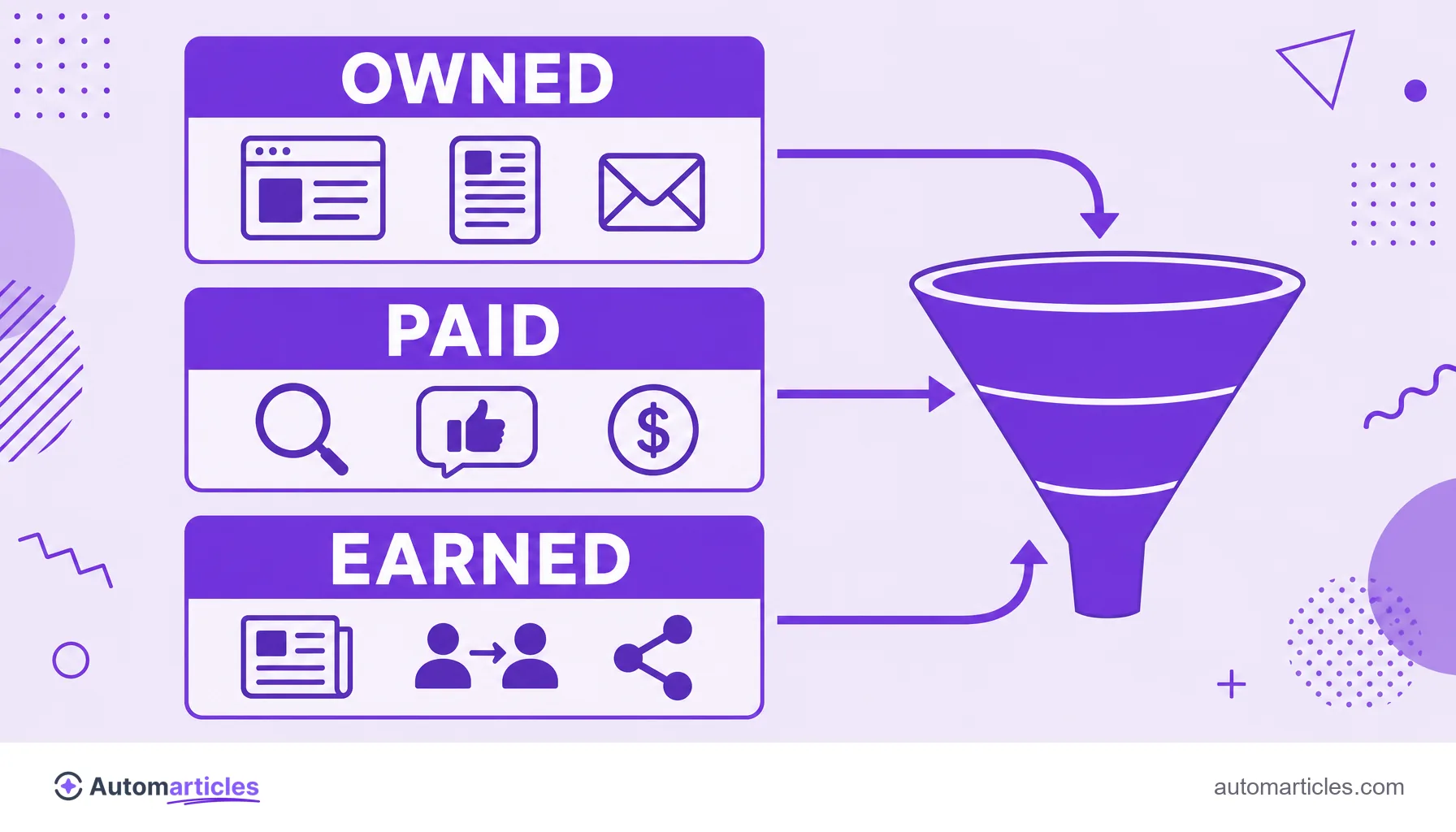
Owned, paid and earned channels
A useful way to organize channels is to group them into three categories, known as owned, paid and earned media:
- Owned: assets you control, such as your site, blog and email list. This is where content marketing builds an audience in a lasting way.
- Paid: spaces you rent, such as search, social and display ads. They bring immediate results via paid traffic, but charge for every click or impression.
- Earned: the attention you gain without paying directly, such as press mentions, referrals and shares.
Inbound marketing strategies tend to lean on owned and earned channels, while outbound marketing actions usually use paid channels to accelerate reach.
The 19 customer acquisition channels
A widely cited reference on acquisition is the book Traction, by Gabriel Weinberg and Justin Mares, which describes nineteen possible channels for a company to grow. The list works as a menu so you do not get stuck on one or two obvious options.
The nineteen channels are: viral marketing, public relations (PR), unconventional PR, search engine marketing (SEM), social and display ads, offline ads, search engine optimization (SEO), content marketing, email marketing, engineering as marketing (free tools), targeting blogs, business development, sales, affiliate programs, existing platforms, trade shows, offline events, speaking engagements and community building.
The core idea of the book is the so-called bullseye test: trying several channels on a small scale, measuring, and concentrating effort on the few that really gain traction for your business, instead of trying them all at once.
How to choose the best channels for your business
There is no universally best channel, there is the right channel for your audience and your moment. To choose with criteria:
- Start with the persona: understand where your persona spends time and how they usually look for a solution to the problem you solve.
- Consider the funnel: some channels attract those still discovering the topic, others capture those ready to buy. Mapping this on the sales funnel avoids investing in the wrong channel for each stage.
- Calculate the cost: compare the customer acquisition cost of each channel with the value that customer generates over time.
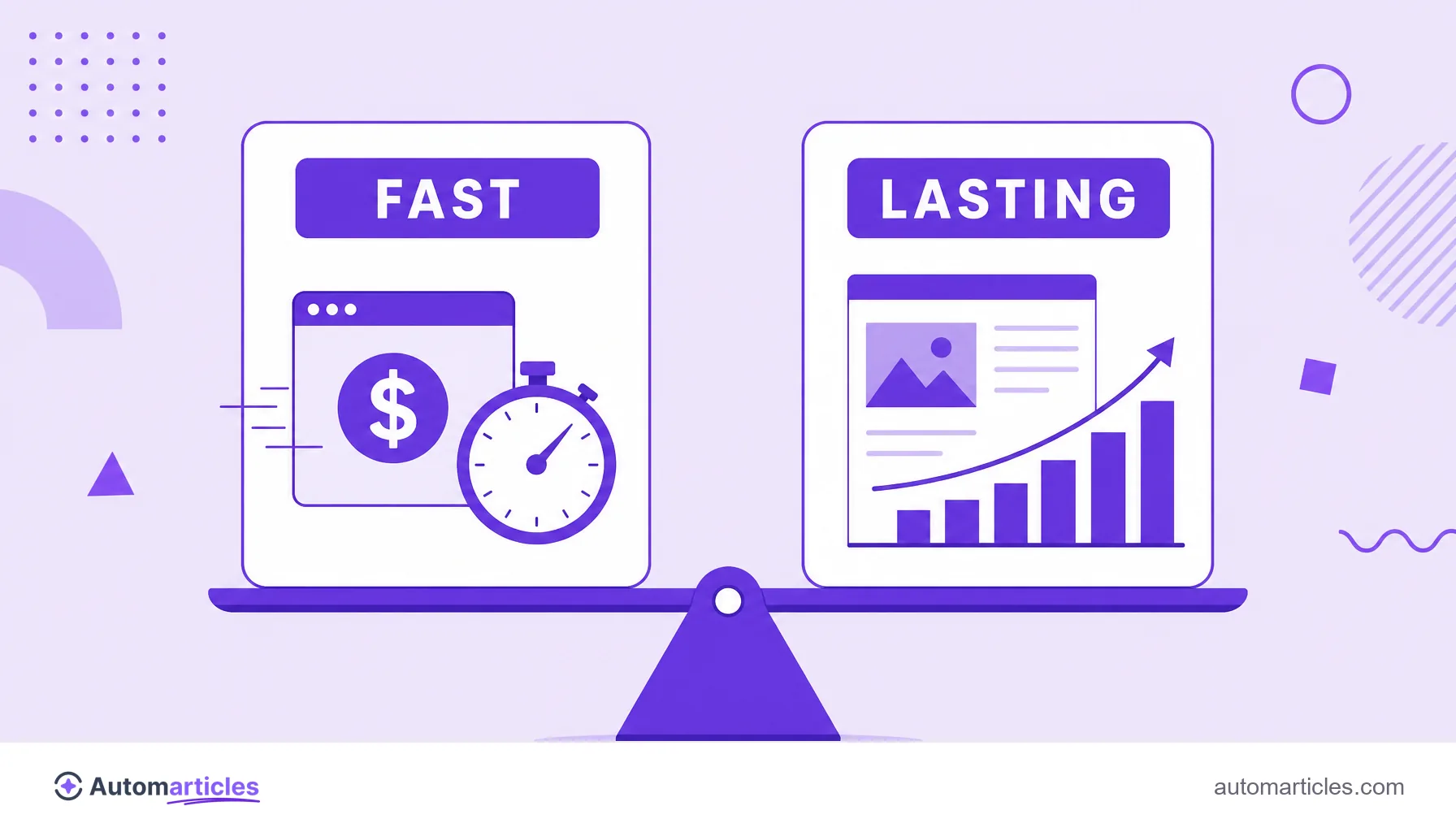
- Balance short and long term: combine a fast result channel, such as paid media, with a building one, such as SEO, which matures but lowers cost over time.
The ideal is to have two or three strong, predictable channels rather than depending on a single one. That way, if one of them wavers, the business is not left without acquisition.
How to measure and optimize acquisition channels
A channel only becomes a strategy when it is measured. Without data, it is impossible to know where to invest more and where to cut. A few practical points:
- Tag the source: use UTM parameters on links to identify which channel each visit came from.
- Track the funnel by channel: do not look only at visits, but at how many become a lead and a customer in each source.
- Improve conversion: working on CRO makes the same traffic volume yield more, increasing the return of all channels at once.
- Review attribution: remember that the customer usually passes through several channels before buying, so avoid giving all the credit to the last click.
With continuous measurement, channels stop being a guess and become a system: you know how much comes in, at what cost, and where to adjust to grow.