
Answer engine: what it is and why it changes SEO
By Tiago CostaUpdated on July 2, 2026

Answer engine is a system that delivers a ready answer instead of a list of links. In practice, it:
- reads and synthesizes several sources at once;
- answers the user's question directly;
- usually cites the sources it used;
- reduces the need to click on results.
What an answer engine is
An answer engine is a search system that answers the user's question directly, delivering a single, ready made answer in place of a list of results to explore. Instead of saying "here are ten pages that might help", it says "here is the answer".
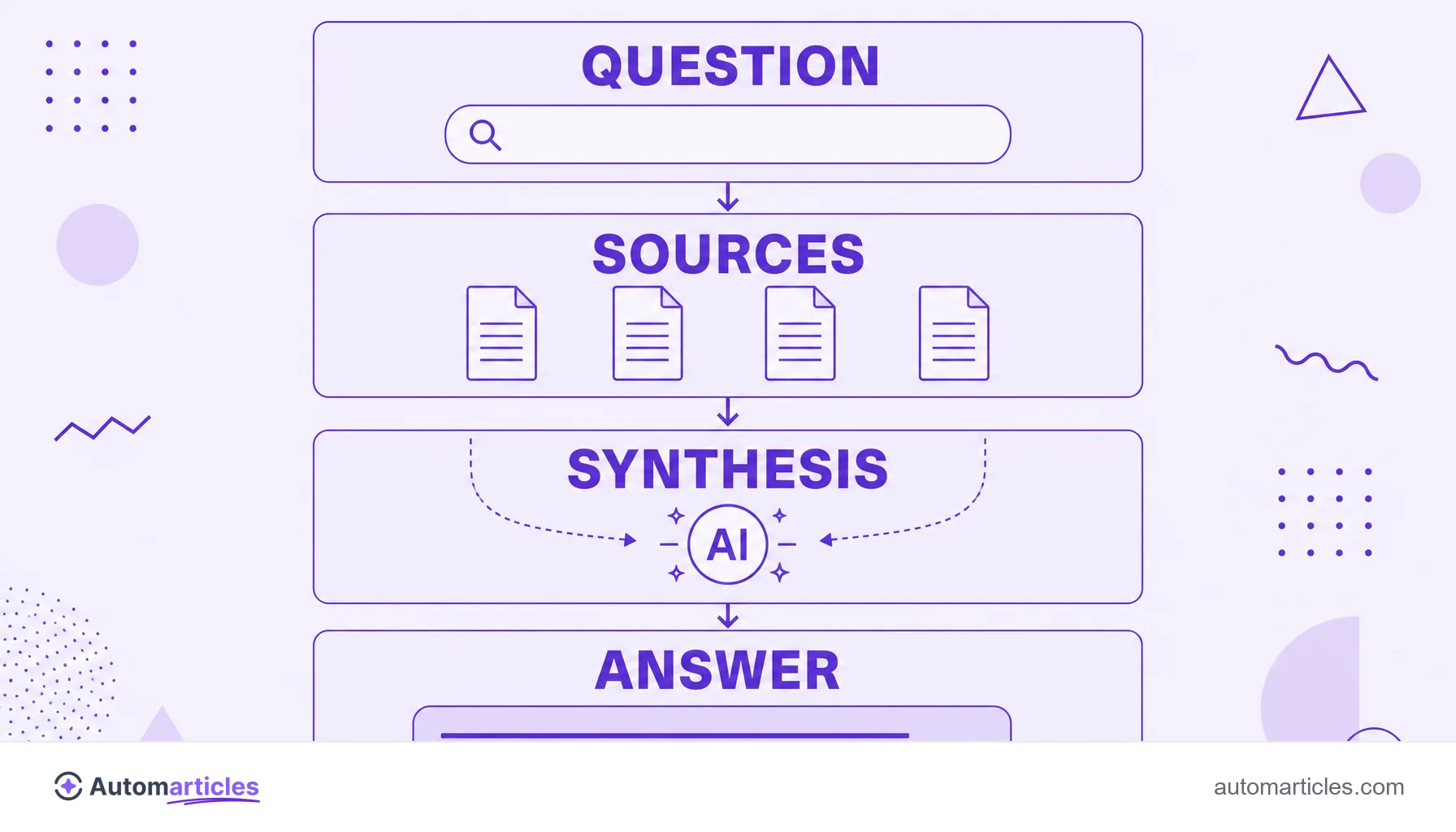
Behind that there is a process that is simple to describe: the engine interprets the question, gathers information from several sources, synthesizes everything and returns a direct text, often with links to the origins. It is the difference between getting a library index and getting the summary already written.
The concept is not entirely new (voice search and featured snippets were already heading that way), but it reached another scale with generative AI, which started writing original answers in natural language about practically any topic.
Answer engine vs traditional search engine
The best way to understand the answer engine is to compare it to the traditional search engine. Both start from a question, but they deliver different things:
| Aspect | Search engine | Answer engine |
|---|---|---|
| Delivery | A list of links to explore | A ready, synthesized answer |
| Source | One page per result | Several sources combined into one answer |
| Expected action | Click and read on the site | Read the answer right there |
| SEO goal | Rank and win the click | Be cited as the source of the answer |
In practice, the two coexist on the same page. Google is still a search engine with its list of links, but it started showing AI answers at the top, working more and more like a hybrid answer engine.
Examples of answer engines
Answer engines are already part of daily life, even if we do not use that name. The main examples:
- Google's AI Overviews: the AI Overviews summarize the answer at the top of search, synthesizing several sources and citing some of them.
- AI assistants: ChatGPT, Perplexity, Gemini and Claude answer in natural language, many with generative search connected to the web in real time.
- Voice assistants: Alexa, Siri and Google Assistant read a single answer out loud, with no screen to list links.
- Featured snippets: the highlighted block of the SERP, which already pulled the answer from a page, is Google's oldest answer engine.
What they all share is the same move: reducing the person's effort by delivering the information instead of pointing to where to look for it.
Has Google become an answer engine?
To a large extent, yes. Google was born as a link search engine, but by placing AI answers at the top it started behaving like an answer engine on a growing share of queries. And that changes the behavior of the person searching.
The data shows the size of the change. A study by the Pew Research Center found that, when there is an AI summary on the page, users click on a link in only 8% of visits, against 15% when there is no summary. The CTR study by Ahrefs estimated that the presence of an AI Overview reduces clicks to the first organic result by around 58%.
This is the scenario of zero-click search, in which the journey ends on the results page itself. For content creators, the message is clear: continuing to rank matters, but being the source cited inside the answer starts to be worth just as much.
What changes in SEO: AEO and GEO
The rise of answer engines gave rise to two acronyms that extend classic SEO. It is worth knowing where each one acts:
- AEO: answer engine optimization, or AEO, is the optimization to become the direct answer in snippets, assistants and AI summaries.
- GEO: generative engine optimization, or GEO, focuses on being cited and used as a source inside AI generated answers.
Both start from the same base as traditional SEO (useful, well structured and trustworthy content), but they change the final goal. Instead of aiming only at the click, they aim at AI citation: making your brand the source the engine chooses to mention. That is why saying SEO is dead makes no sense. It is evolving to include optimizing for machines that answer.

How to optimize for answer engines in practice
Optimizing for answer engines is about making life easier for whoever reads and synthesizes your content: the machine. In practice:
- Answer the question right away: open each section with a direct answer in one or two sentences, before going deeper.
- Structure in extractable blocks: use clear headings, lists, tables and a FAQ block that answers common questions at once.
- Mark up with structured data: structured data helps the machine understand what each passage means.
- Prove authority: cite sources and data and reinforce E-E-A-T (experience, expertise, authoritativeness and trust), because answer engines prefer trustworthy sources.
- Write clearly: short sentences and one idea per paragraph make extraction easier.
The takeaway is direct: the easier you make the extraction of your answer, the greater the chance the engine chooses your content as the source it cites.