
Bottom of funnel (BoFu): what it is and how to convert
By Tiago CostaUpdated on July 2, 2026
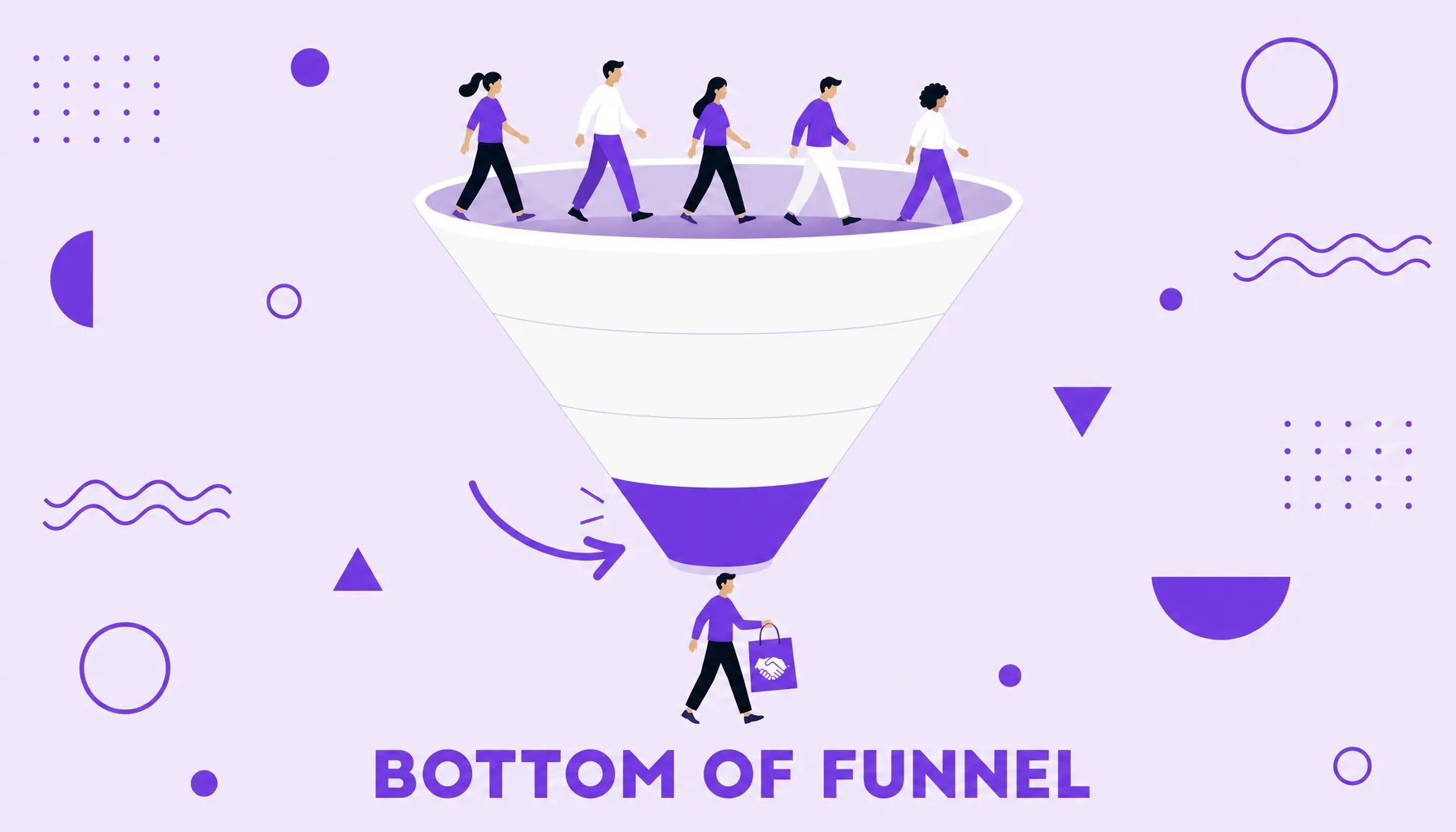
Bottom of funnel (BoFu) is the decision stage of the buying journey. Content at this stage:
- speaks to people already ready to buy or hire;
- clears the last objections and compares options;
- shows concrete proof (cases, demos, pricing);
- has conversion into a customer as its direct goal.
What bottom of funnel (BoFu) is
Bottom of funnel, also called BoFu, is the final stage of the marketing funnel, the one where the person is one step away from becoming a customer. By this point, they have already gone through the top of funnel, where they discovered they had a problem, and the middle of funnel, where they compared ways to solve it.
The big difference is the level of intent. At the bottom of the funnel, interest is already mature: the person no longer wants to understand the concept, they want to decide which solution to buy. That is why content at this stage is straight to the point and geared toward conversion, helping them choose your brand over the competition.
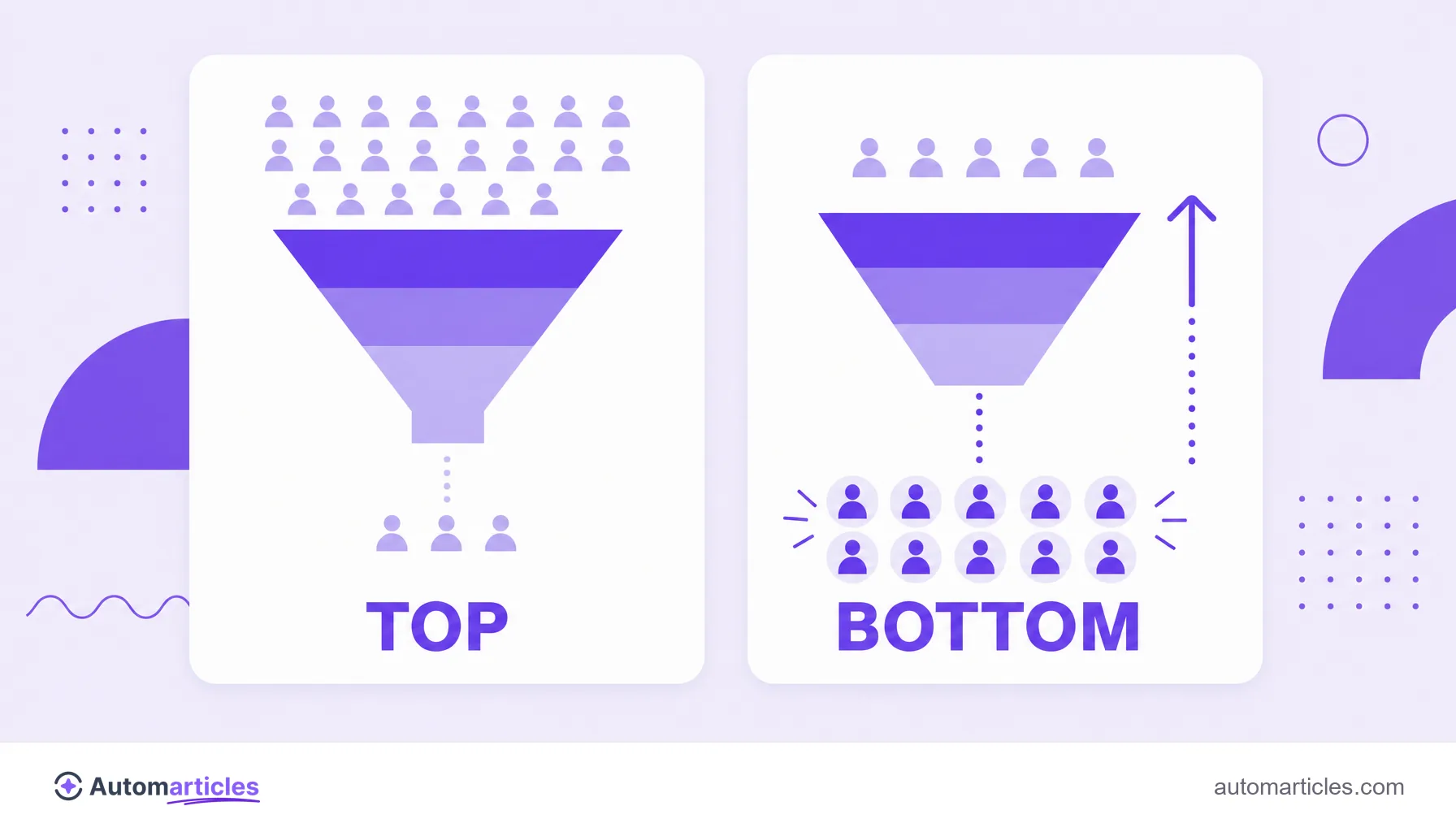
The bottom of the funnel is the narrowest part because few of the people who entered at the top make it this far. In return, they are the most valuable, since they are close to the decision. Every well-made BoFu piece therefore has a direct impact on revenue.
Top, middle and bottom of funnel: where BoFu fits
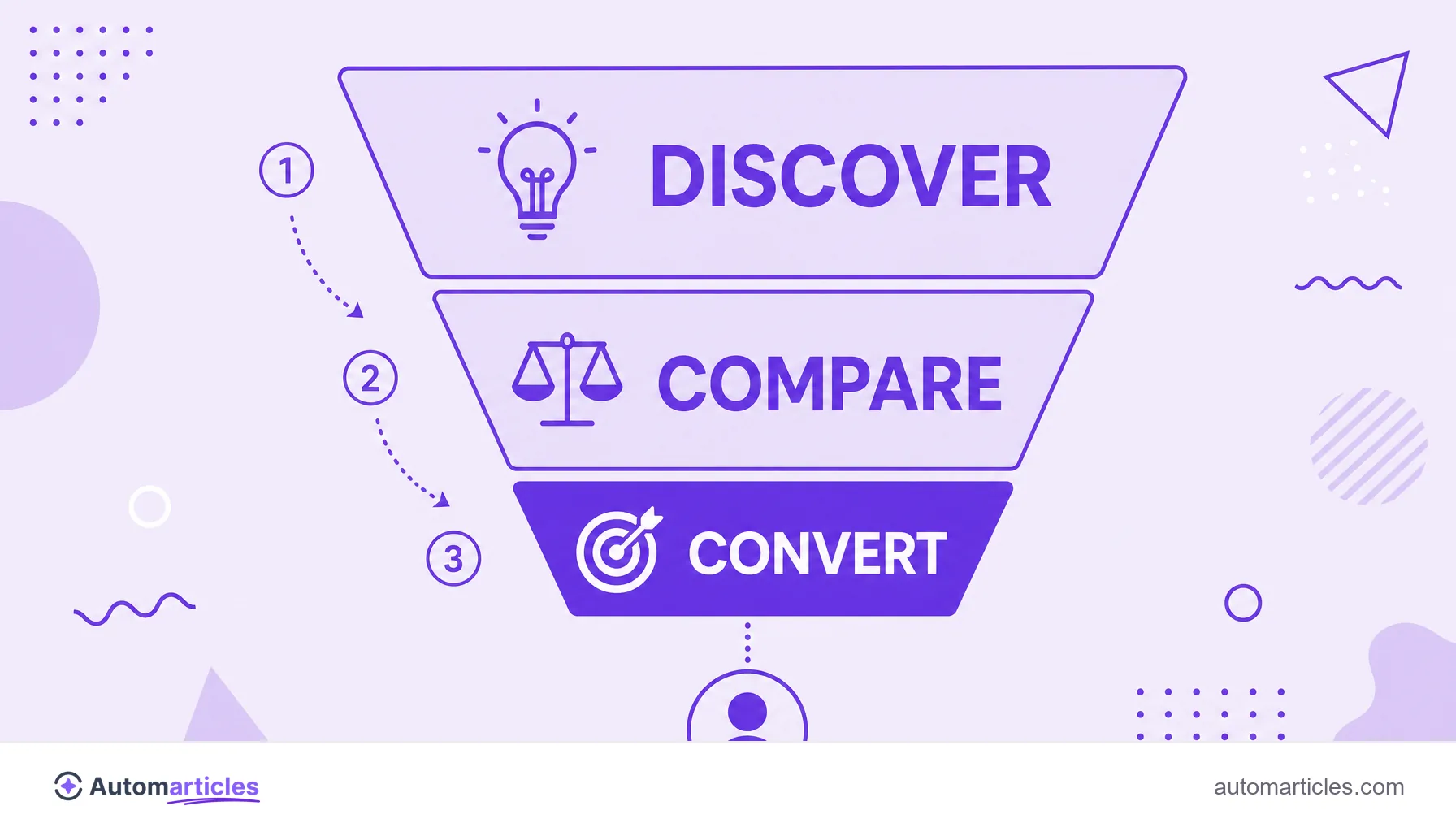
To understand the bottom of the funnel, it helps to see the whole funnel. Each stage speaks to a different point in the buying journey, and the content changes tone as the person advances.
| Stage | Mindset | Type of content |
|---|---|---|
| Top (ToFu) | Discovering the problem. | Educational articles, guides, blog posts. |
| Middle (MoFu) | Comparing solutions. | Comparisons, webinars, gated content. |
| Bottom (BoFu) | Deciding the purchase. | Demos, cases, pricing pages, proof. |
Note that the goal changes at each band. At the top, you want to attract and educate; in the middle, to nurture and qualify; at the bottom, to convert. A common mistake is treating all content the same, offering educational material to someone already ready to buy, or pushing the sale on someone who barely discovered the problem.
What content works at the bottom of the funnel
BoFu content has a clear mission: remove the last barriers and prove value. The formats that convert best at this stage are:
- Product and pricing pages: where the person checks what is included and how much it costs, often on a dedicated landing page.
- Comparisons and alternative pages: content like "brand A vs brand B", which helps those deciding between you and a competitor.
- Cases and testimonials: real stories of customers who got results, working as social proof.
- Demos and free trials: the chance to try the solution before deciding.
- FAQs and objection pages: direct answers to the doubts that stall a purchase, such as warranty, support and integration.
All these formats have something in common: a clear call to action. At the bottom of the funnel, the next step needs to be explicit, whether "buy now", "talk to sales" or "start the trial".
Bottom of funnel keywords (high intent)
In SEO, the bottom of the funnel shows up in high intent keywords, the ones a person types when they are already close to deciding. They usually have less volume, but convert far more.
Some typical BoFu search patterns:
- Comparisons: "brand A vs brand B", "best tool for X".
- Purchase intent: "price of", "how much does it cost", "hire", "buy".
- Alternatives: "alternative to product X", which captures those who already know a competitor.
- Reviews: "is product X good", "is product X worth it".
These searches are the terrain of demand capture: the person already wants to solve the problem, and your job is to be there at the right moment. Many of them are long tail keywords, specific and with less competition, which makes them great opportunities for those just starting out.
How to create bottom of funnel content that converts
Producing BoFu that actually sells follows a few practical principles:
- Focus on the decision, not the discovery: assume the person already knows the problem and go straight to why your solution fits.
- Use concrete proof: numbers, cases, testimonials and demos are worth more than adjectives.
- Anticipate objections: answer honestly the doubts that usually stall a purchase, including price and comparison with competitors.
- Make the next step obvious: a single clear call to action per page, without distracting with ten options.
- Connect with the rest of the funnel: use internal links to guide anyone who still needs context back to top and middle content.
It is worth remembering that BoFu does not live alone. It reaps what the top and the middle sowed, and depends on good lead nurturing along the journey. When the three stages are aligned, bottom content merely formalizes a decision that was already maturing.
Bottom of funnel and conversion: what the numbers say
The big advantage of the bottom of the funnel is the conversion rate. Because it speaks to people already ready to decide, this content turns far more visits into customers than top of funnel content.
The difference is huge in practice. In a content analysis published by Grow and Convert, a client's top of funnel content converted at just 0.19%, while the bottom of funnel content converted at 4.78%, that is, about 25 times more. In the same study, comparison and alternative pages reached a conversion of 8.43%, among the highest rates of all the formats analyzed.
The strategic takeaway is clear: a handful of good bottom of funnel pieces can generate more customers than dozens of top of funnel articles. This does not mean abandoning the top, which remains essential to attract and educate, but rather prioritizing BoFu when the immediate goal is revenue. That is why lean teams often start at the bottom of the funnel and only later expand to the upper layers.