
Top of the funnel (ToFu): what it is and how to work it
By Tiago CostaUpdated on July 2, 2026

Top of the funnel (ToFu) is the discovery stage of the marketing funnel, when a person realizes they have a problem and looks for information. Top of the funnel content:
- attracts a broad audience with educational topics;
- answers general questions, without mentioning the product;
- uses formats like blog articles, videos and posts;
- aims to build awareness and qualified traffic.
What top of the funnel (ToFu) is
Top of the funnel, or ToFu (short for top of the funnel), is the first of the three main stages of the marketing and sales funnel. It is the phase of discovery, when a person has just realized they have a problem, a question or a need, but is not yet thinking about buying anything.
Picture a kitchen funnel, wide at the top and narrow at the bottom. Many people with varied interests enter at the top and, as they move down, part of that audience qualifies and moves on to the next stages. That is why the top is the moment to attract and educate, not to sell. Whoever arrives here is still researching, comparing ideas and trying to understand their own situation better.
Top of the funnel content answers broad, general questions, almost always without mentioning the product. The goal is to be found by those who have the problem your solution solves and, from there, to start a relationship that can mature over the buyer journey.
Top, middle and bottom of the funnel: where ToFu fits
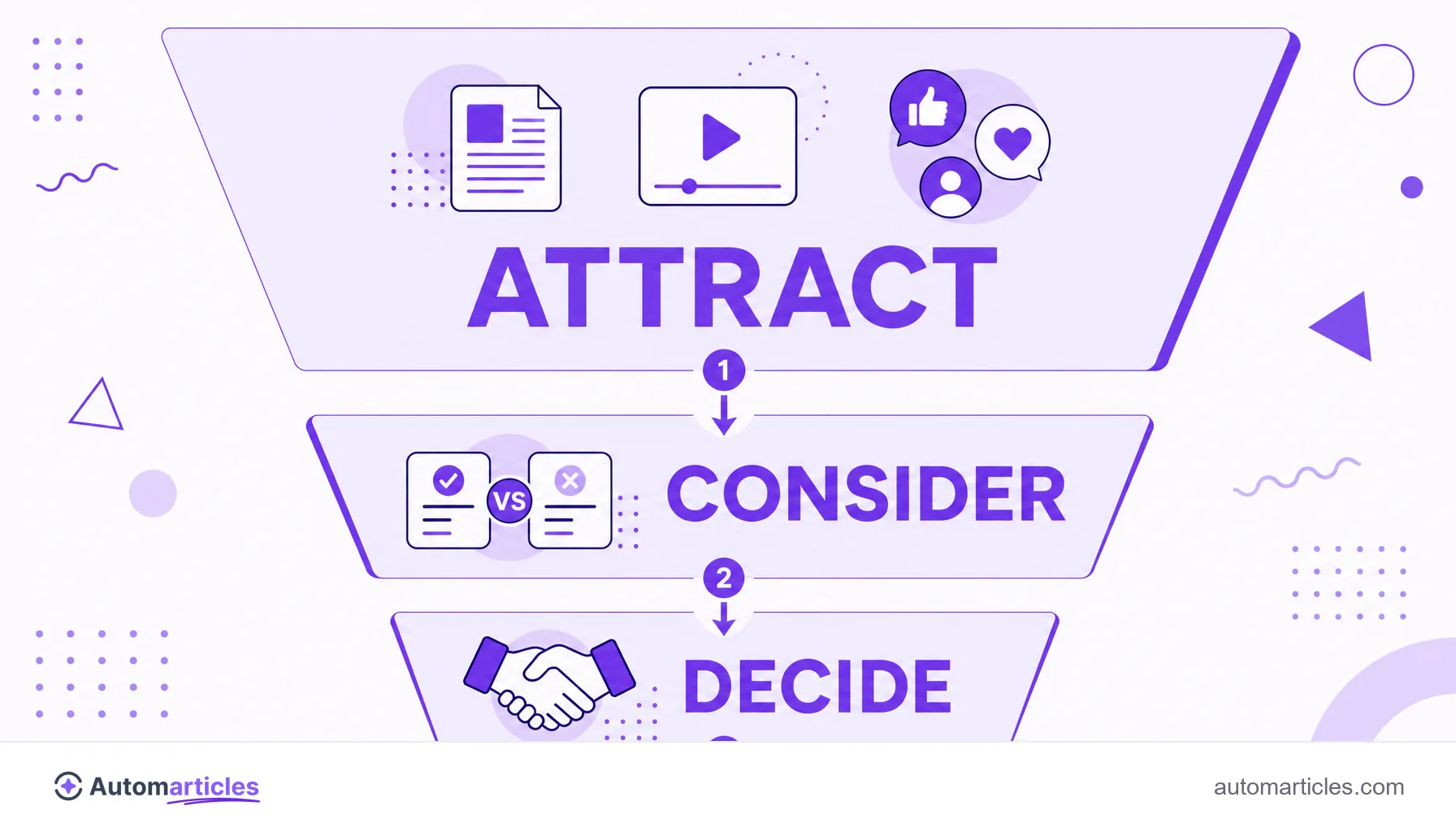
The top of the funnel does not work alone. It is the entry door of a structure with three stages, each with a different goal:
| Stage | Where the audience is | Goal of the content |
|---|---|---|
| Top (ToFu) | Discovers a problem or need | Attract and educate with broad topics |
| Middle (MoFu) | Considers solutions to the problem | Help compare and nurture interest |
| Bottom (BoFu) | Decides which solution to hire | Convince and drive the conversion |
While the middle of the funnel deepens the topic and the bottom of the funnel talks directly about the product, the top keeps its focus on the audience's problem. Confusing the stages is a classic mistake: offering a sales proposal to someone who just discovered the topic tends to push them away instead of drawing them in. The natural path is to guide the person from one stage to the next, respecting their pace within the sales funnel.
What content works at the top of the funnel
At the top, content needs to be easy to find and easy to consume. It answers the audience's first questions and shows up exactly where those questions arise: in Google search, in social feeds and on YouTube. The formats that work best are:
- Educational blog articles: guides, lists and what is style pieces, supported by content marketing and SEO to attract organic traffic.
- Videos and social media posts: short content that explains a concept or shows a common problem.
- Infographics and visual materials: easy to share and to understand in seconds.
- Podcasts and newsletters: formats that build an audience and awareness over time.
The rule to know whether a piece of content belongs to the top is simple: if it talks about the problem, it is top; if it talks about the solution or the product, it is already middle or bottom. According to the annual research by the Content Marketing Institute, 84% of B2B marketers say content marketing helped create brand awareness in the last year, exactly the central goal of the top of the funnel.
What a top of the funnel lead is
A top of the funnel lead is the contact who entered your base while still in the discovery phase. They showed interest in a topic, downloaded an introductory resource or subscribed to the newsletter, but have not yet evaluated solutions or shown a clear intent to buy.
This type of lead is usually called cold: they need time and information before being ready for a commercial approach. Trying to sell to them too soon wastes the opportunity. The role of the top is to capture that contact with a light magnet, such as an ebook or a checklist, and then guide them with lead nurturing until they mature. Comparing each contact with your persona helps separate those with real potential from those who just came across the content out of curiosity.
Top of the funnel on Instagram and social media
On social media, the top of the funnel is most of what you publish. It is the content designed for reach and discovery, made to stop the thumb of someone scrolling the feed who does not yet know your brand. On Instagram, for example, this category includes:
- Reels and short videos that explain a concept or show a common mistake the audience makes;
- Educational carousels with quick tips and data that earn saves and shares;
- Behind the scenes posts and stories that introduce the brand in a light way.
The logic is the same as the blog: deliver value before asking for anything. A good top of the funnel creative educates or entertains first and, only then, invites the person to take the next step, whether that is following the profile or clicking the link in the bio that leads to a landing page.

How to work the top of the funnel: step by step
Working the top of the funnel consistently is what guarantees a predictable flow of new contacts. A routine that works:
- Know your audience's questions: map the questions your persona asks at the start of the journey, supported by keyword research and search intent.
- Produce broad and useful content: answer those questions clearly, without forcing the product.
- Distribute where the audience is: combine SEO, social media and video to widen your reach.
- Offer a light magnet: an introductory resource that captures the contact in exchange for value.
- Measure and connect to the rest of the funnel: track traffic, new leads and how many move on to the middle of the funnel.
The top of the funnel pays off in the medium term: it builds the audience and awareness that feed the following stages. Whoever produces discovery content regularly creates a solid base of people who have already heard of the brand when, at last, it is time to decide the purchase.