
Content funnel: what it is and how to apply it
By Tiago CostaUpdated on July 2, 2026
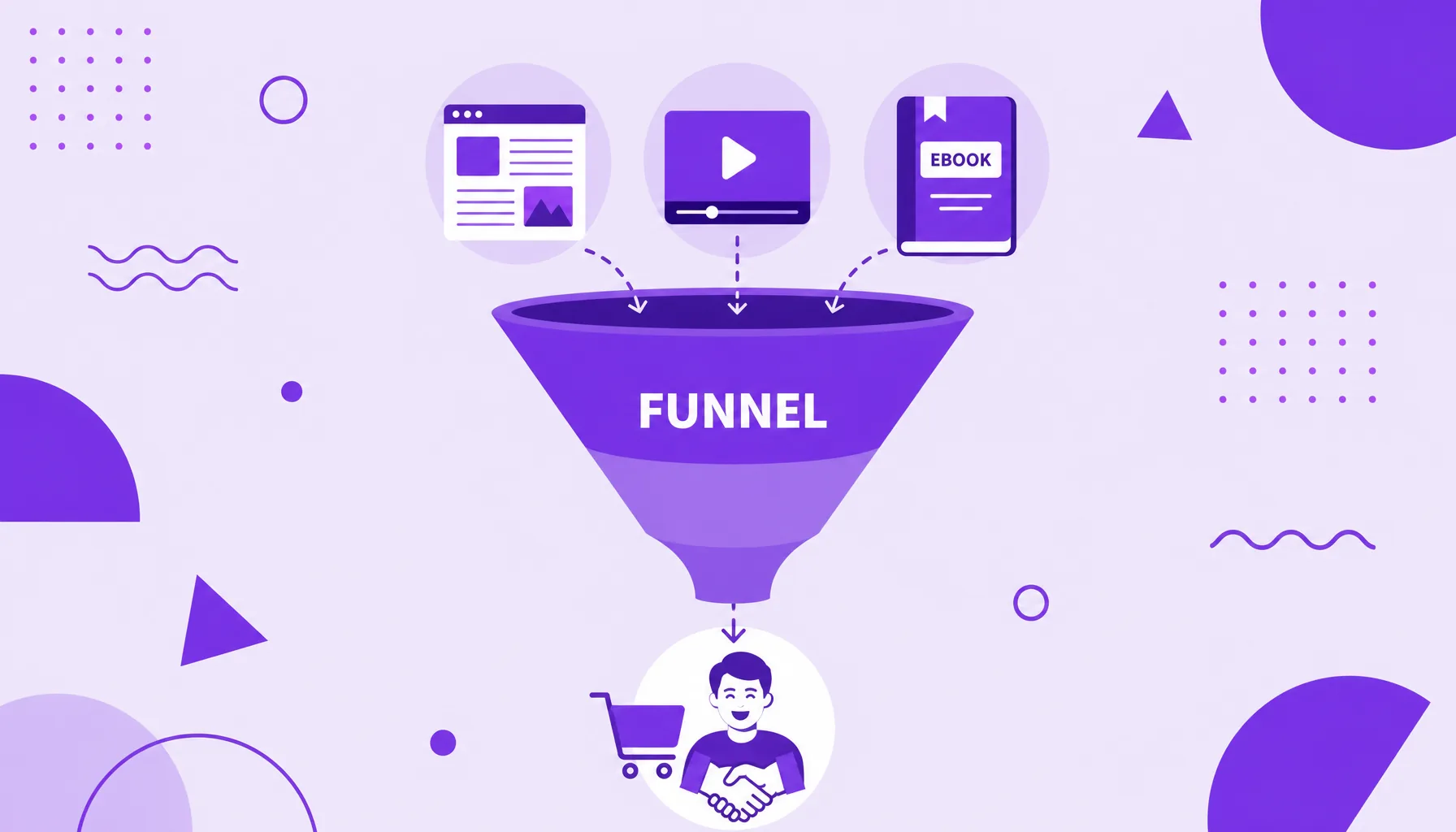
A content funnel is the planning of content for each stage of the customer journey, from the first contact to the purchase. In practice, it:
- splits production into top, middle and bottom of funnel;
- delivers the right material for the right moment of the audience;
- attracts strangers, educates prospects and convinces those deciding;
- turns visitors into leads and leads into customers gradually.
What a content funnel is
A content funnel is the way of organizing content production according to the stage a person is at in their relationship with your brand. The core idea is simple: someone who has just discovered a problem needs very different content from someone who is already comparing suppliers and about to buy.
The name comes from the funnel shape: at the top, many visitors enter, drawn by broad content; along the way, some of them advance, dig deeper and a smaller fraction reaches the bottom, ready to convert. Each stage filters and qualifies the audience.
This concept is the backbone of a good content marketing strategy, because it connects each piece to a clear goal within the buying journey. Without this map, it is common to produce plenty of top content and have nothing that helps the audience decide.
Content funnel and sales funnel: what is the difference
The two funnels go together, but they are not the same thing. The sales funnel describes the commercial stages a contact goes through, from the first interest to the close, and is usually driven by the sales team. The content funnel is the content layer that feeds this path, attracting and educating the audience before the salesperson steps in.
In practice, the content funnel is the engine of the top and middle, while the sales funnel takes over more strongly at the bottom. A good middle-of-funnel piece, for example, warms up the contact so they reach the sales conversation already convinced of most of the arguments.
It is also worth distinguishing it from the marketing funnel, a broader term that covers all acquisition channels (paid media, social networks, email), not just content. The content funnel is the organic, educational slice of that machine.
The stages of the content funnel
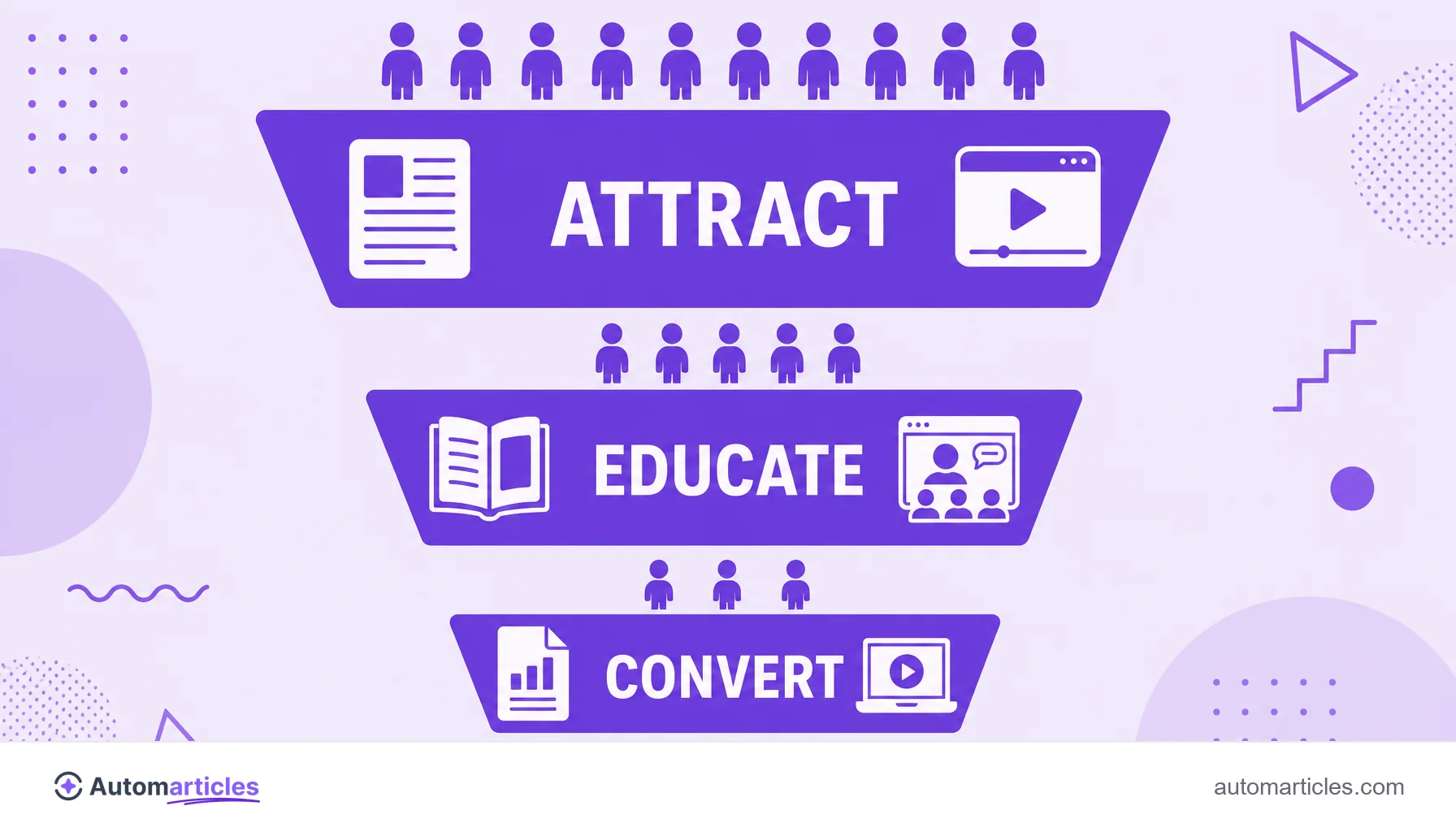
The most common model splits the funnel into three broad stages. Understanding the goal of each one prevents producing the wrong piece for the wrong audience:
| Stage | Audience moment | Content goal |
|---|---|---|
| Top (ToFu) | Discovering a problem or need. | Attract and educate broadly. |
| Middle (MoFu) | Considering solutions to the problem. | Go deeper and generate leads. |
| Bottom (BoFu) | Deciding between buying options. | Convince and convert. |
At the top of funnel, the focus is volume and reach. At the middle of funnel, the goal is to qualify, often trading a resource for a contact. At the bottom of funnel, the content removes objections and proves value to close the sale.
What content to produce at each stage
Each stage calls for its own format and tone. Distributing the content types well is what makes the funnel spin:
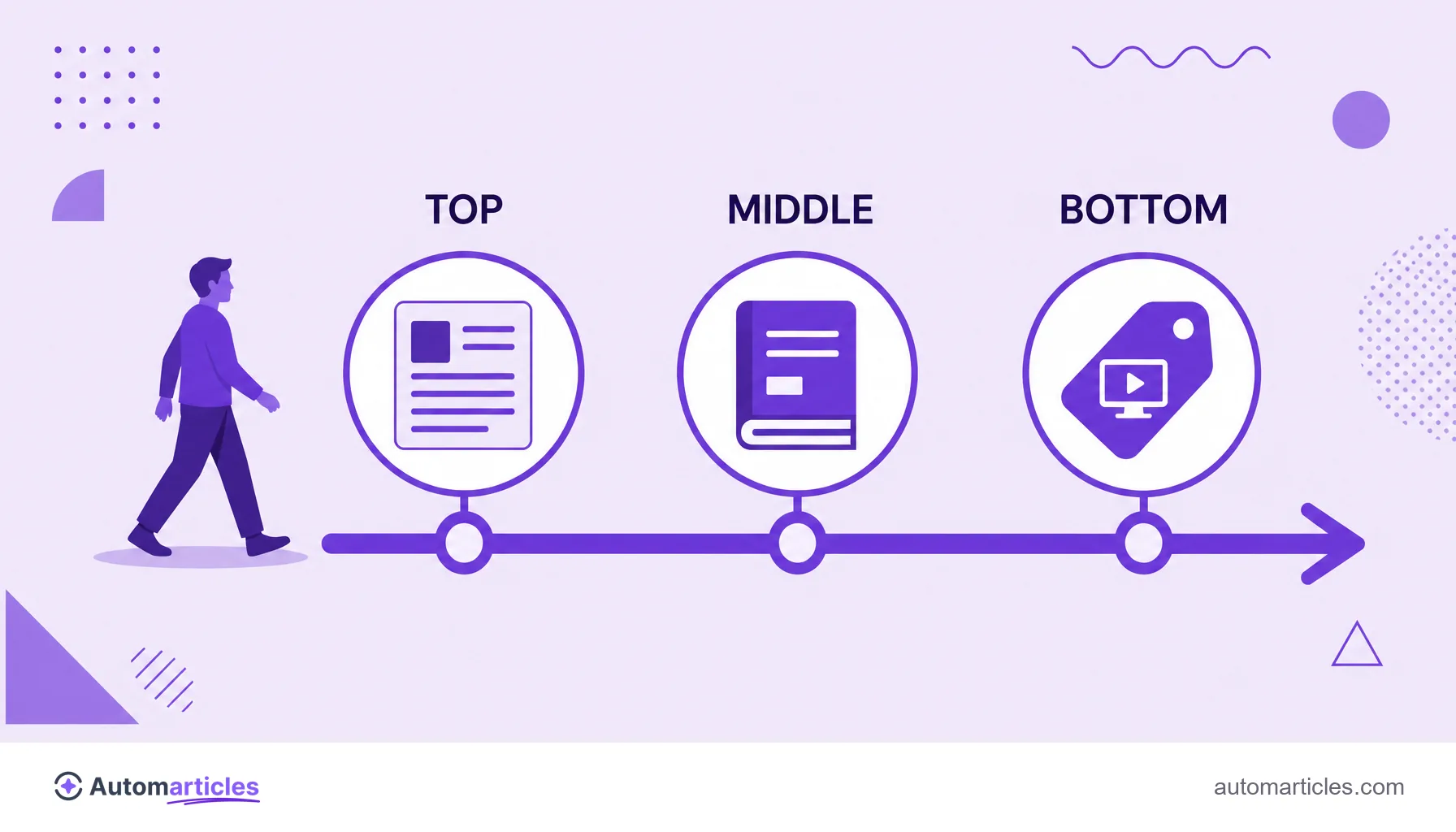
- Top: "what is" blog articles, educational posts, introductory videos, infographics and social media content. They answer broad questions and attract traffic.
- Middle: ebooks, webinars, checklists, studies and comparisons that go deeper into the topic and work as a magnet to capture the contact.
- Bottom: case studies, demos, free trials, pricing tables and product pages, which help those who already want to buy decide.
A classic mistake is to concentrate everything at the top and forget the bottom. Without decision content, the educated visitor will buy from the competitor that answered the final questions. Mapping the objections of your persona helps fill exactly these gaps.
How to build your content funnel step by step
Building a content funnel is a job of planning, not improvisation. A routine that works:
- Define the persona and the journey: understand what questions your audience has at each stage before writing anything.
- Do an inventory: list the content you already have and mark which stage it belongs to. There is almost always too much top and too little bottom.
- Fill the gaps: create the missing pieces, prioritizing the stages closest to the sale, which have a direct impact on revenue.
- Connect the content: use CTAs and internal links to lead the reader from one stage to the next, with no dead ends.
- Measure and adjust: track traffic at the top, lead generation in the middle and conversion at the bottom, and reinforce where the funnel leaks.
The funnel does not have to be born complete. Start with one strong piece per stage and keep densifying as the data shows where the bottlenecks are.
Nurturing and metrics: what makes the funnel convert
Having content at every stage is only half the work. The other half is moving the contact from one stage to the next, which rarely happens on its own. That is where lead nurturing comes in: email and content sequences that re-engage those who downloaded a middle-stage resource and have not advanced yet.
The return of doing this well is concrete. According to the nurturing statistics gathered by HubSpot, based on data from the Annuitas Group, nurtured leads make purchases that are on average 47% larger than those of non-nurtured leads. In other words, a well-worked middle of funnel not only raises conversion, it increases the value of each sale.
To know where to adjust, track one metric per stage: traffic and reach at the top, lead conversion rate in the middle and close rate at the bottom. When one of those drops stands out, that is where the funnel is leaking and asking for more (or better) content.