
Search volume: what it is and where to find it
By Tiago CostaUpdated on July 2, 2026

Search volume is the estimated number of monthly searches a keyword gets in a search engine. In practice, it:
- measures the size of the demand for a term;
- is usually shown as a monthly average of the last few months;
- is an estimate, not an exact number;
- should be read together with difficulty and search intent.
What search volume is
Search volume is the estimate of how many times a keyword is searched in a search engine within a period, almost always expressed as a monthly average. If a term has a volume of 1,000, that means it is searched, on average, a thousand times per month.
This number is one of the first things an SEO looks at when assessing an opportunity. It answers a simple, important question: roughly how many people are interested in this topic enough to type it into search. Without demand, the best content in the world has few people to reach.
It is worth understanding where the data comes from. Tools calculate volume from sources like Google's own data and the click behavior they monitor, then apply statistical models. That is why volume is always an approximate estimate, not an exact, real time count.
Why search volume matters, and why it misleads on its own
Volume matters because it sizes the organic traffic potential of a topic. Prioritizing terms with real demand avoids the classic mistake of writing flawless texts about subjects almost no one searches for.
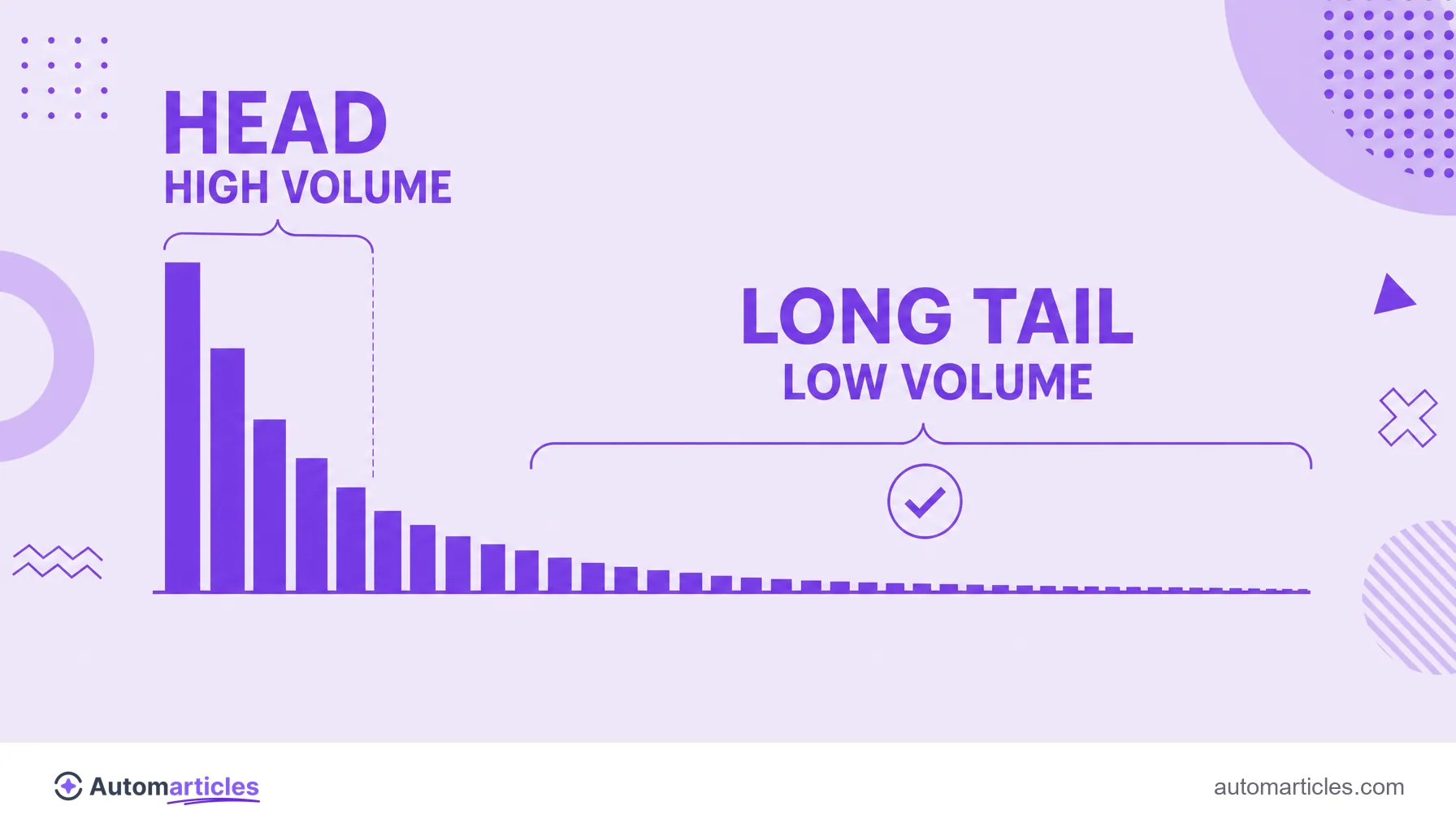
But looking only at high volume is a trap. Most searches happen in the long tail, with specific, low volume terms. According to the keyword study by Ahrefs, almost 93% of all keywords in its US database (about 2.3 billion terms) get 10 searches per month or fewer. In other words, there is an ocean of demand outside the few giant terms.
The mature read is that low volume does not mean a bad opportunity. Long tail terms tend to have less competition and clearer intent, which often converts better than a generic, very high volume word. Volume is the size of the audience, not a guarantee of results.
Where to find search volume
There are several tools that estimate search volume, from free to paid. The most used are:
- Google Ads Keyword Planner: the source closest to Google, free, though it shows wide ranges for those who do not advertise.
- Google Trends: it does not give the absolute number, but it reveals how interest evolves over time and how terms compare.
- Ahrefs and Semrush: paid tools that bring volume, difficulty and related metrics in one place.
- Ubersuggest and similar: more affordable alternatives, good for a first estimate.
A practical tip: the numbers vary from tool to tool, because each uses its own base and model. The ideal is to pick a main source and use it consistently, to compare terms under the same criterion across the whole keyword research.
Is search volume exact? How to read the number
No, search volume is never exact, and treating the estimate as absolute truth leads to bad decisions. The number shown is an average, so it flattens important peaks and valleys.
A few precautions help you read it better:
- Seasonality: terms like christmas gift have a low average annual volume, but explode in November and December.
- Ranges instead of values: free tools often show intervals, like 100 to 1,000, not a closed number.
- Regional and language variation: the same term can have very different volumes by country.
- Grouping of variations: some tools add up synonyms and plurals, which inflates the number.
So use volume as an order of magnitude (is it a large, medium or small term) and not as a promise of visits. The final decision comes from the set of signals, not from an isolated number.
Volume, difficulty and intent: reading them together
Volume alone decides nothing. It only makes sense crossed with two other factors that define whether a term is worth targeting:
| Factor | What it answers |
|---|---|
| Search volume | How many people search for the term per month. |
| Difficulty | Keyword difficulty estimates how hard it will be to rank against the competition. |
| Intent | Search intent reveals what the person really wants when searching. |
The sweet spot is usually a term with reasonable volume, difficulty compatible with your site's authority and intent aligned with what you offer. Huge volume with very high difficulty is guaranteed frustration for a new site. A modest, easy volume with spot on intent can be exactly the win you need.

How to use search volume in your content strategy
In practice, volume helps build and prioritize the content plan. A simple flow that works:
- Start from a seed: begin with a seed keyword and expand into dozens of related variations.
- Collect the volume of each term: record the estimate to get an order of magnitude for the demand.
- Mix head and tail: combine a few big terms with many long tail keywords, which added up bring plenty of qualified traffic.
- Prioritize by the trio: order the opportunities by the balance of volume, difficulty and intent.
- Group by topic: gather similar terms into a single strong piece, instead of scattering them across weak pages.
The most common mistake is chasing only the highest volume terms and ignoring the long tail. By adding up many pieces well aimed at specific searches, a blog builds consistent traffic that is hard for a competitor to knock down all at once.