
Long tail: what long-tail keywords are in SEO
By Tiago CostaUpdated on July 2, 2026

Long-tail keywords are long, specific searches with lower volume and higher intent. They usually have:
- three or more words in the query;
- less competition to rank for;
- clearer search intent;
- a higher conversion rate.
What is long tail
In search marketing, long tail is the name given to the longer, more specific keywords with lower search volume. While a generic term like shoes attracts an ocean of vague searches, a long-tail query like best running shoes for a beginner marathon reveals exactly what the person is looking for.
Individually, this kind of keyword brings little traffic, but it exists in enormous quantity. Added together, long-tail searches account for most of everything that is searched on the internet.
The big advantage is clarity. The more specific the search, the more evident the search intent behind it, and the easier it is to deliver exactly what the user wants, which usually translates into more conversions.
The long tail theory: from Chris Anderson's origin to SEO
The long tail concept was not born in SEO. It was popularized by Chris Anderson, then editor of Wired magazine, in a 2004 article that became the 2006 book The Long Tail.
The original thesis was about digital business: in physical stores, limited shelf space forces you to sell only the champions (the hits). On the internet, without physical shelves, it is possible to offer millions of niche products. The sum of so many rarely sold items, the long tail of the demand curve, can surpass the revenue of the few big hits.
Applied to SEO, the idea is the same. There are very few giant, high-volume terms and an infinity of specific searches with little volume each. Working that tail of niche queries is what lets smaller sites attract qualified traffic without going head to head with the industry giants.
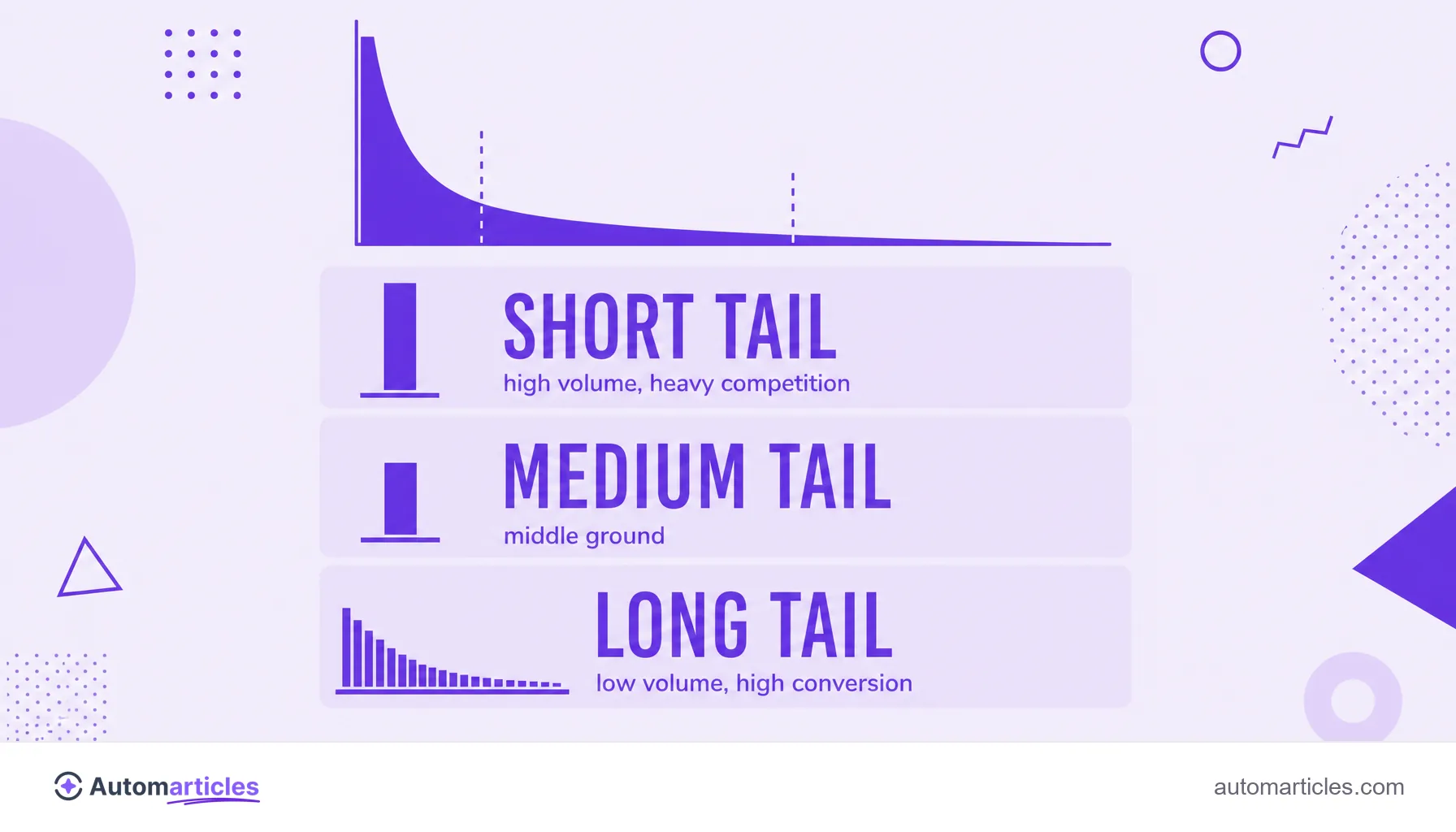
Long tail and short tail: the differences
To understand the long tail, it helps to compare it with the other end of the curve, the short tail:
| Characteristic | Short tail | Long tail |
|---|---|---|
| Length | 1 to 2 words | 3 or more words |
| Volume | High | Low |
| Competition | Very high | Low to medium |
| Intent | Vague | Clear and specific |
| Conversion | Lower | Higher |
Between the two extremes there is also the medium tail, a middle ground in volume and specificity. In practice, a good strategy combines all three, but it is in the long tail that most sites find the most accessible opportunities to start ranking.
Why long-tail keywords are worth it
The long tail looks small when you look at one keyword at a time, but the total volume is huge. According to the study of 306 million keywords by Backlinko, around 91.8% of all terms are long tail, that is, they get 10 monthly searches or fewer. Ahrefs, which analyzed billions of terms, reached the same conclusion: the vast majority of keywords have very low volume.
This changes the game for those just starting out. The advantages are clear:
- Less competition: the keyword difficulty is usually low, so even new sites can rank.
- Obvious intent: the specific search reveals what the person wants, making it easier to write on target.
- More conversion: whoever searches for something detailed is generally closer to the buying decision.
Adding up dozens of long-tail articles usually yields more qualified traffic than trying, without success, to rank for a single giant, hotly contested term.

Examples of long-tail keywords
The best way to understand the long tail is to see the difference in practice. Compare the generic term with the long-tail versions:
- Short tail: shoes. Long tail: men's running shoes for overpronation.
- Short tail: cake recipe. Long tail: fluffy gluten-free carrot cake recipe.
- Short tail: marketing. Long tail: how to build a content calendar for a beginner blog.
Notice that the longer the search, the easier it is to picture the perfect page to answer it. That is why the long tail pairs so well with blogs: each specific question can become a dedicated article.
How to find long-tail keywords
Discovering long-tail terms is simpler than it seems. Some practical paths:
- Google autocomplete: start typing a term and watch the suggestions that appear.
- People Also Ask: the People Also Ask block on the SERP reveals real user questions.
- Related searches: the footer of the results page brings variations in the related searches block.
- SEO tools: a good keyword research in tools like Semrush or Ahrefs lists hundreds of long-tail variations with their volumes.
The secret is to think like your audience. Every specific question they would type into Google is a potential long-tail keyword waiting for content that answers it better than all the rest.