
Long-tail keywords: what they are and how to use them
By Tiago CostaUpdated on July 2, 2026

A long-tail keyword is a long, specific search with low volume and high intent. In practice, it usually has:
- three or more words in the query;
- low search volume, yet huge when added up;
- less competition to rank;
- clear intent and higher conversion.
What is a long-tail keyword
A long-tail keyword is the type of keyword made up of long, specific queries with three or more words. While a generic term like shoes gathers an ocean of vague searches, a query like running shoes for overpronation for men says exactly what the person is looking for.
The name comes from the long-tail curve: a tiny handful of terms concentrate huge volume, and an endless number of specific searches occupy the long tail of low volume. Each one brings little traffic on its own, but together they add up to most of the searches made on the web.
The central advantage is clarity. The more specific the search, the more obvious the search intent behind it, and the easier it is to deliver exactly what the user wants, which usually translates into more conversions.
Short-tail, mid-tail and long-tail: the keyword family
The long tail is one of the three sizes that keywords are usually classified into. It helps to understand the whole family to know where each type fits in your strategy:
| Type | Length | Volume | Competition | Example |
|---|---|---|---|---|
| Short tail | 1 to 2 words | High | Very high | shoes |
| Mid tail | 2 to 3 words | Medium | Medium | running shoes |
| Long tail | 3 or more | Low | Low | running shoes for overpronation |
In practice, a good strategy combines the three sizes, but it is in the long tail that most blogs find the most accessible opportunities to start ranking, precisely because it faces the least competition.
Why bet on long-tail keywords
Looked at one by one, the long tail seems small. In aggregate, it is where most of the search lives. In the study of 306 million keywords by Backlinko, 91.8% of all terms are long tail (1 to 100 searches per month). Ahrefs, analyzing its United States database, found around 2.3 billion keywords with fewer than 10 monthly searches, almost 93% of the whole database.
For those just starting, this changes the game. The advantages are direct:
- Less competition: the keyword difficulty is usually low, so even new sites can rank.
- Obvious intent: the specific search reveals what the person wants.
- More conversion: whoever searches for something detailed is usually closer to the decision.
There is an important counterpoint: the same Backlinko shows that the entire long tail combined accounts for only 3.3% of total search volume. In other words, a single long-tail word yields little, and the strategy only works at scale: dozens or hundreds of articles, each capturing a qualified slice.
How to find long-tail keywords
Discovering long-tail terms is simpler than it seems. A few practical paths:
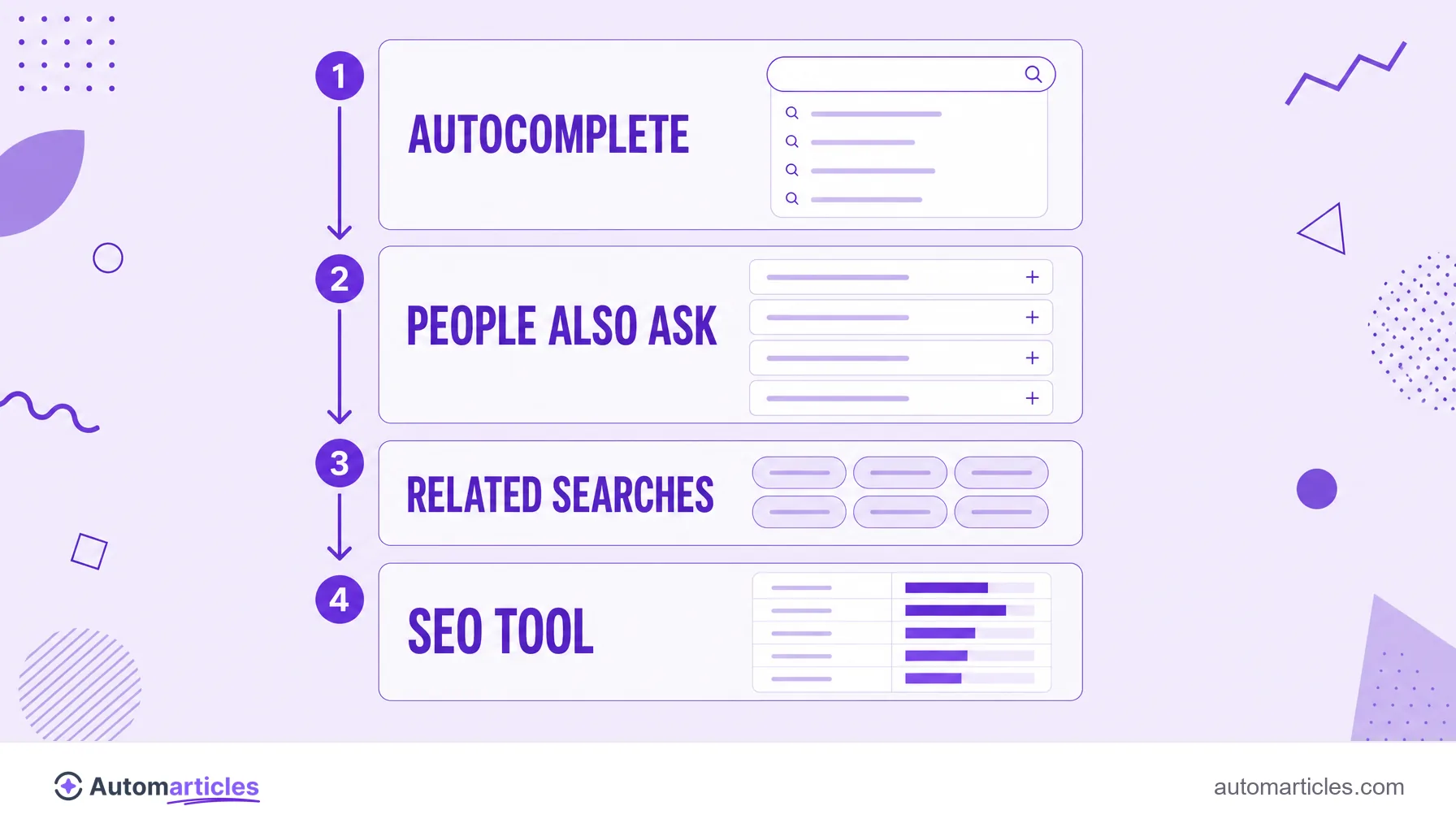
- Google autocomplete: start typing a term and watch the suggestions that appear.
- People Also Ask: the People Also Ask block shows real user questions on the SERP.
- Related searches: the footer of the results page brings variations in the related searches block.
- Start from a broad term: use a seed keyword as a starting point and let the tools expand it into hundreds of variations.
- SEO tools: a good keyword research lists the variants with their volumes and difficulty.
The secret is to think like your audience. Every specific question they would type into Google is a potential long-tail keyword waiting for content that answers it better than the rest.
How to use the long tail in your content strategy
Finding the terms is half the work. The other half is organizing them so they reinforce each other. A few principles:
- One article per question: each long-tail keyword with its own intent deserves a dedicated page that answers the question in full.
- Group into clusters: connect several long-tail articles around a central theme into a content cluster, linked to a broader pillar page.
- Cover the funnel: alternate informational searches (how to, what is) with more commercial ones (best, price, comparison), following the journey to the decision.
Worked this way, the long tail stops being a handful of loose terms and becomes a mesh of content that builds topical authority and captures qualified traffic in a sustainable way.

Common mistakes when working the long tail
The long tail is accessible, but a few slips ruin the result:
- Creating nearly identical pages: very similar variations competing with each other cause keyword cannibalization. When two searches share the same intent, a single page solves it.
- Forcing the exact term: repeating the long phrase artificially hurts readability. A natural keyword density, with synonyms and variations, works better.
- Ignoring total volume: betting on a single long-tail term yields little. The gain comes from scaling dozens of them.
- Forgetting the intent: a long, transactional search calls for a product page or landing page, not an informational article.