
Editorial calendar: what it is, how to make one and benefits
By Tiago CostaUpdated on July 2, 2026

An editorial calendar is a schedule that plans and organizes content publishing over time. In practice, it brings together in one place:
- the publishing date of each piece of content;
- the topic, format and keyword of each idea;
- the distribution channel (blog, social media, email);
- the owner and the status of each piece.
What an editorial calendar is
The editorial calendar is the document that organizes, on a timeline, everything your brand is going to publish: which topics, in which formats, on which channels and on which dates. It works as the map that turns a list of ideas into a production plan with a beginning, a middle and an end.
More than a pretty calendar, it is a management tool. It answers practical day to day questions: what goes live this week, who is writing, what has already been reviewed and what still depends on an image or an approval. Without that control, content production becomes a race against the deadline.
That is why the editorial calendar is the backbone of any content marketing strategy. It connects long term planning, such as the topic map you want to cover, with the concrete execution of each week.
Editorial calendar and editorial line: the difference
The two terms are often confused, but they play different roles. The editorial line is the strategy: it defines what the brand talks about, in what tone of voice, for which audience and with which goal. It is the compass. The editorial calendar is the execution of that strategy over time, that is, when and where each piece of content, aligned with the editorial line, will be published.
A quick comparison helps it stick:
| Editorial line | Editorial calendar |
|---|---|
| Defines the why and the what | Defines the when and the where |
| Tone of voice, topics and values | Dates, formats and owners |
| Changes little over time | Is updated every week |
In practice, the editorial line comes first and guides the calendar. Without a clear line, the calendar becomes just a schedule of posts with no direction; without a calendar, the editorial line never leaves the page.
What are the types of editorial calendar
There is no single format. The editorial calendar is usually organized by channel, and teams keep one per work front. The four most common types are:
- Blog calendar: plans articles by keyword and topic, with SEO and topical authority in mind. It usually has a longer horizon.
- Social media calendar: the social media editorial calendar organizes the posts of each network (Instagram, LinkedIn, TikTok), with captions, formats and key dates.
- Email marketing calendar: maps newsletters, campaigns and flows, aligning sends with the content funnel.
- Video or podcast calendar: organizes the production of content that requires recording and editing, with tighter deadlines.
In small teams, everything can fit into a single integrated calendar. What matters is not the number of calendars, but that each channel has clear dates, topics and owners.
Why use an editorial calendar: the benefits
Keeping an editorial calendar may feel like bureaucracy, but it is exactly what separates those who publish on impulse from those who grow predictably. The main gains:
- Consistency: publishing regularly is one of the strongest predictors of results. In the 12th annual survey by Orbit Media, with 808 content marketers, 37% of those who publish several times a week report strong results, against an overall average of 21%.
- Documented strategy: having the plan in writing makes a difference. According to CoSchedule, marketers who document their strategy are 414% more likely to report success.
- The big picture: the calendar reveals topic gaps, an excess of one format and seasonal dates you cannot miss.
- Less rework: with topics planned, the team produces ahead of time, without firefighting on the eve.
In short, the calendar trades the anxiety of improvisation for the calm of a plan that runs on its own.
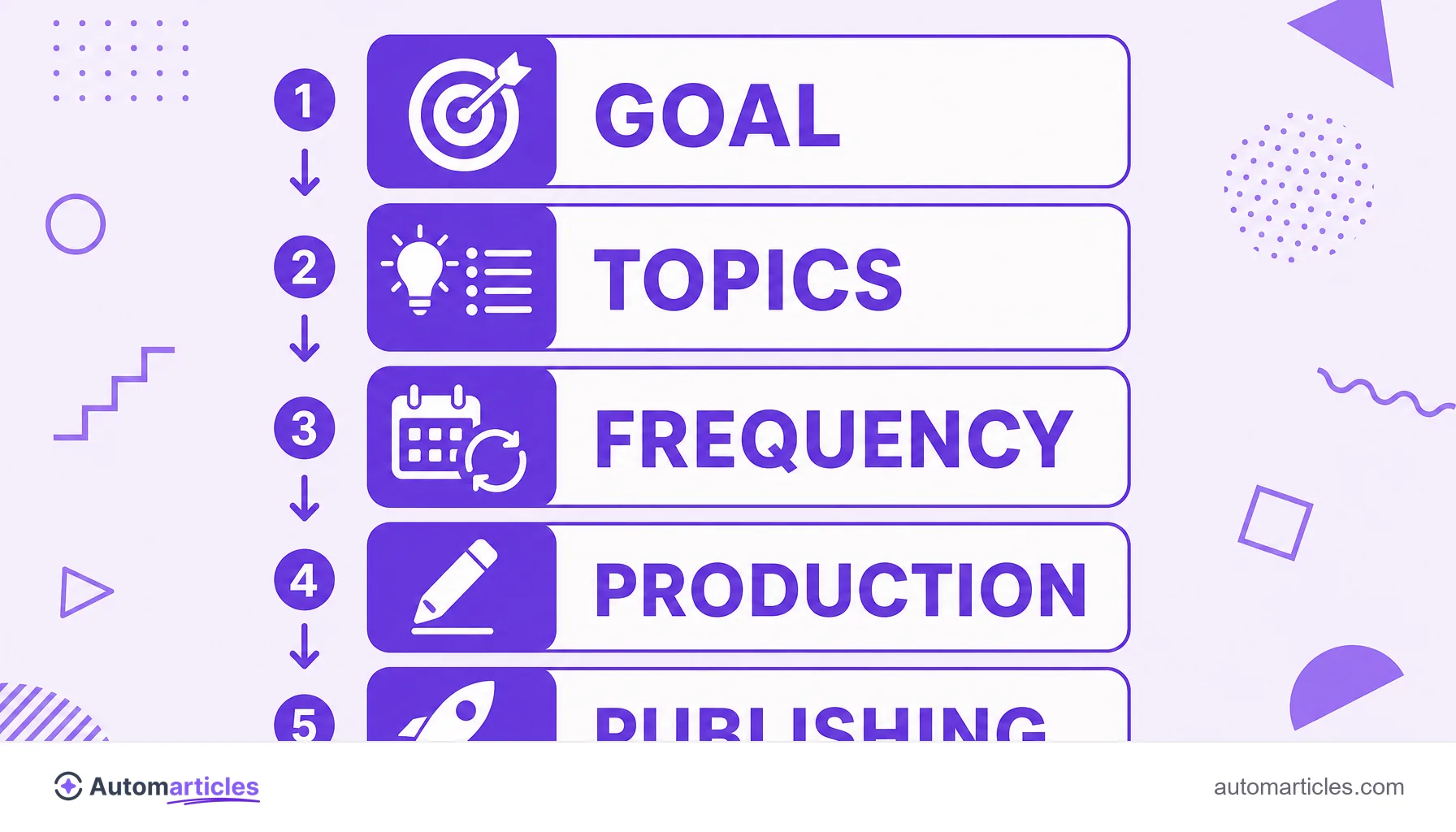
How to make an editorial calendar step by step
Building your first calendar is simpler than it looks. A routine that works:
- Define goal and audience: before the dates, know what you want to achieve and who you are talking to.
- Gather topics: start from keyword research and the real questions of your audience to generate a list of themes.
- Organize into clusters: group the topics around a pillar page and its content clusters, to cover a subject in depth.
- Set the frequency: choose a rhythm you can sustain, even if it is one article a week. Consistency beats volume.
- Detail each topic: turn the theme into a content brief with title, keyword, format and owner.
- Choose the tool and publish: record everything in a spreadsheet or app and track the status until publication.
One detail that pays off: reserve room for evergreen content, the kind that does not expire, alongside the seasonal topics. It sustains traffic in the months when key dates do not help.

Tools and templates for your editorial calendar
You do not need expensive software to start. What matters is having a single, shared and always up to date place. The most used options:
- Spreadsheets (Google Sheets, Excel): free, flexible and great for beginners. One row per topic, columns for date, theme, channel, owner and status.
- Kanban boards (Trello, Notion): visual and easy to drag between stages such as idea, production, review and published.
- Management tools (Asana, ClickUp, Monday): good for larger teams, with deadlines, owners and dependencies.
- Ready made templates: many are free and serve as a starting point, but adapt the columns to your reality.
The best tool is the one your team actually uses. Start simple, with a spreadsheet, and only move to something heavier when the volume of content justifies it.