
Content brief: what it is and how to create one (with template)
By Tiago CostaUpdated on July 2, 2026
A content brief is the document that guides the writing of a text before it is written. A good brief usually includes:
- the goal of the piece and the audience it serves;
- the primary keyword and the secondary ones;
- the search intent and the angle to follow;
- the required topics and the heading structure;
- references, internal links and the expected format.
What a content brief is
A content brief is the script that turns strategy into practical instructions for whoever is going to write. Instead of handing the writer just a loose topic, the brief gathers, in a single document, everything the piece needs in order to meet its goal: the target keyword, the intent behind the search, the topics that cannot be missing and the expected format.
The word comes from brief, meaning summary or instruction. In content marketing, the brief plays the role of aligning everyone involved before the first line is written, from the strategist who defined the topic to the editor who will approve the text. Without that alignment, each person fills the gaps with their own guess, and the result almost always drifts from the plan.
In practice, the brief grows out of an earlier step, keyword research, and turns that data into an actionable assignment. It is the bridge between what the strategy decided to target and the text that actually goes live.
Why the brief is essential for SEO and for the team
Writing without a brief is like traveling without a map: you may get somewhere, but rarely to the right destination. The brief reduces rework, shortens the review cycle and makes sure every article reinforces the strategy, instead of pulling in different directions.
This gain is backed by market data. An annual survey by the Content Marketing Institute shows that 47% of the most successful content marketers work with a documented strategy, against 29% of all respondents. The brief is exactly where that documented strategy meets the execution of each piece.
There is also a long-term effect. When every text on the same theme follows consistent briefs, the site covers the subject completely and builds topical authority, which helps rank not just one article, but the whole set.
What a good content brief should include
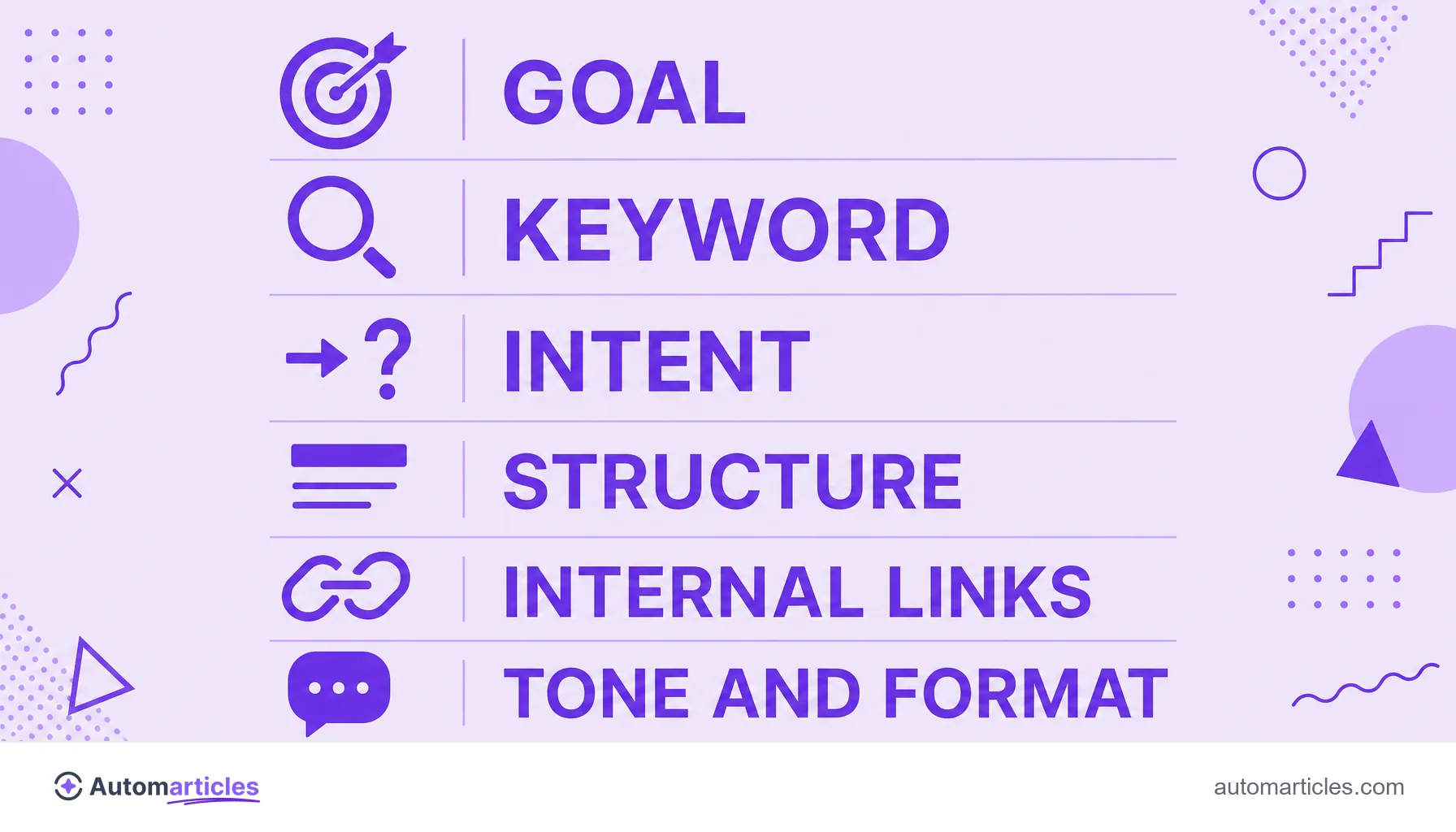
There is no single template, but the best briefs share a core of information. The clearer each field, the fewer doubts the writer will have. The essential elements are:
- Goal and audience: what the piece needs to generate (traffic, lead, authority) and who it speaks to.
- Keyword and variations: the primary term and the secondary words that give the topic context.
- Search intent: what the person expects to find, defined by the search intent behind the query.
- Suggested structure: the titles and subtitles (heading tags) that organize the text and the required topics.
- Title and meta: a suggested title tag and meta description to guide the angle.
- Internal links and references: the pages of the site itself to connect and the reliable sources to consult.
- Tone, format and length: the brand voice, the format (guide, list, tutorial) and the expected size.
Gathering all of this in one place avoids the back and forth of messages and leaves the writer free to focus on what matters: writing well.
How to create a content brief step by step
Building an effective brief is a short process, as long as it follows a logical order. A reliable routine:
- Start with the keyword and the intent: define the target term and read the SERP analysis to understand the format Google already rewards.
- Map the competitors that rank: see what the top results cover and, above all, what they leave out.
- List the required topics: use People Also Ask and related searches to find questions the text needs to answer.
- Define the structure: sketch the H2s and H3s in the order that makes sense to the reader, from basic to advanced.
- Point out the internal links: choose the site pages that reinforce the theme and should be connected with internal links.
- Close with tone, length and deadline: record the brand voice, the estimated size and the delivery date.
The goal is not to lock creativity, but to give the writer a solid starting point, so that energy goes into the quality of the text, not into guessing what was expected.

Content brief template (a practical example)
To make it concrete, here is a lean template that works for most blog articles. Just fill in each field before handing it to the writer:
| Field | Filled example |
|---|---|
| Primary keyword | content brief |
| Search intent | Informational (the person wants to understand the concept and see a template) |
| Goal of the piece | Attract top of funnel and build authority on the content topic |
| Suggested title | Content brief: what it is and how to create one |
| Required topics | Definition, what to include, step by step, template |
| Internal links | Content marketing, editorial calendar, search intent |
| Tone and length | Educational, about 1,200 words |
Keeping this template in a shared editorial calendar lets production scale without losing the standard, since every new assignment starts from the same base.
Common mistakes when building a brief
A poorly made brief can get in the way more than it helps. The most frequent slips are:
- Being too vague: asking for a text on a broad theme, with no keyword or angle, hands the entire decision back to the writer.
- Being detailed to the point of freezing: dictating every sentence kills the flow and turns the writer into a typist.
- Ignoring search intent: a brief that says to sell when the search is informational produces a text that does not rank.
- Forgetting internal links: without pointing out the connections, the article is born isolated and does not distribute authority across the site.
- Not reviewing before publishing: the brief guides the writing, but the final text still needs a critical read so it does not become thin content.
The ideal balance is a brief that is clear on goals and SEO rules, yet open enough for the writer to bring their own examples, voice and depth.